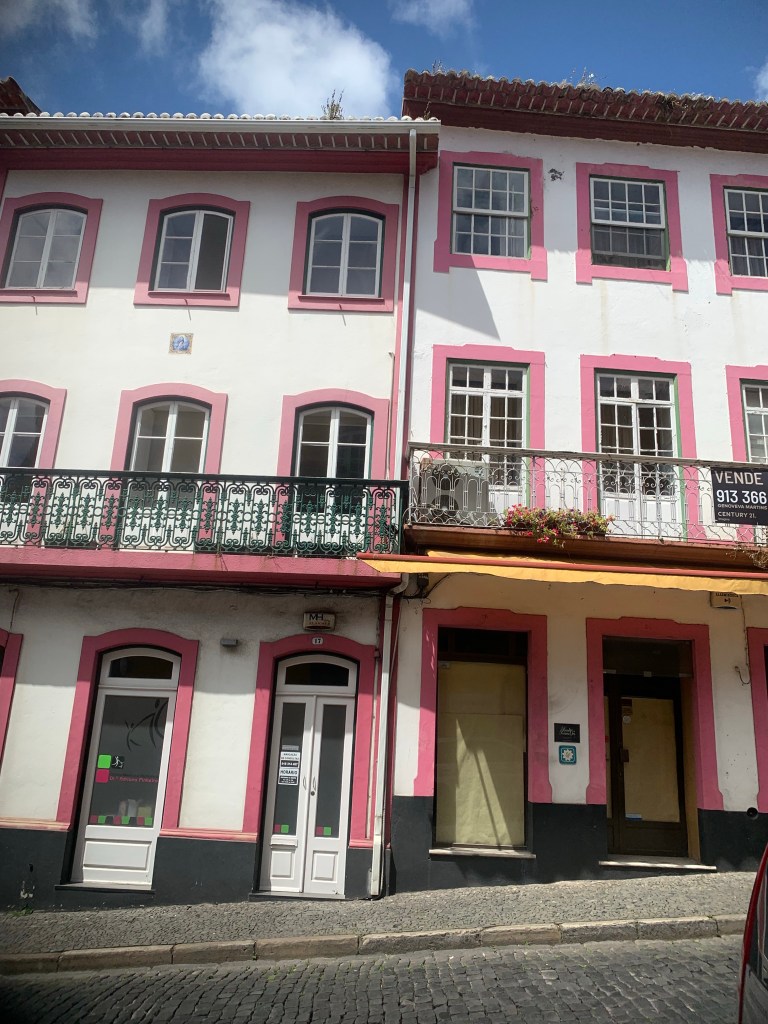
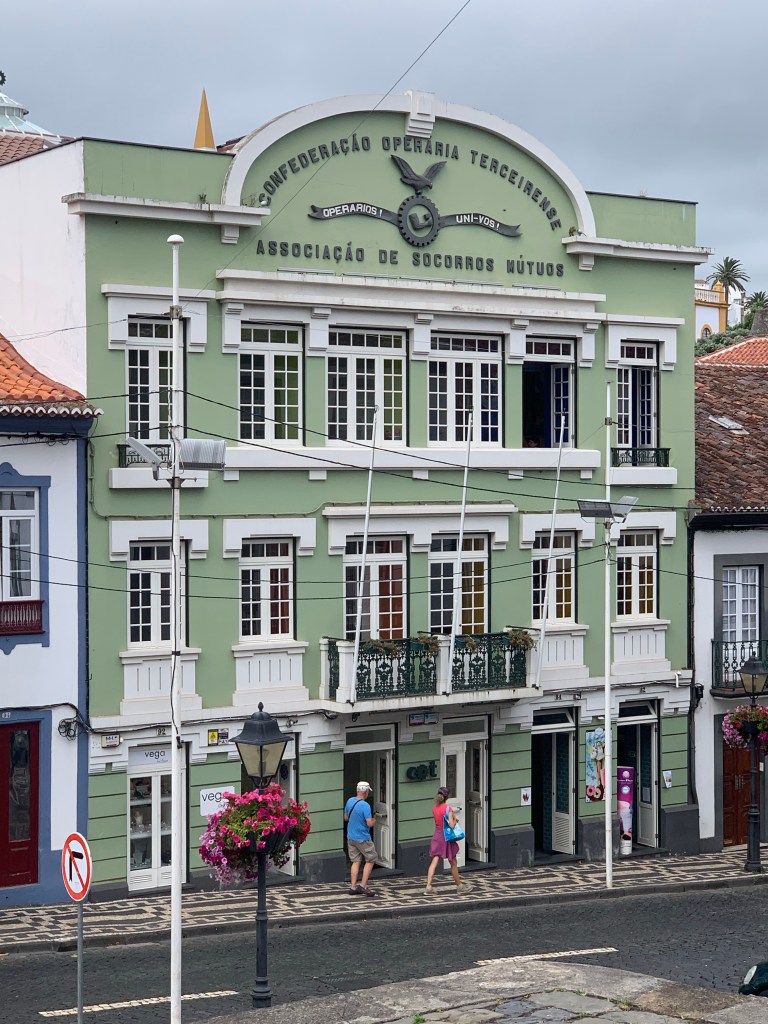
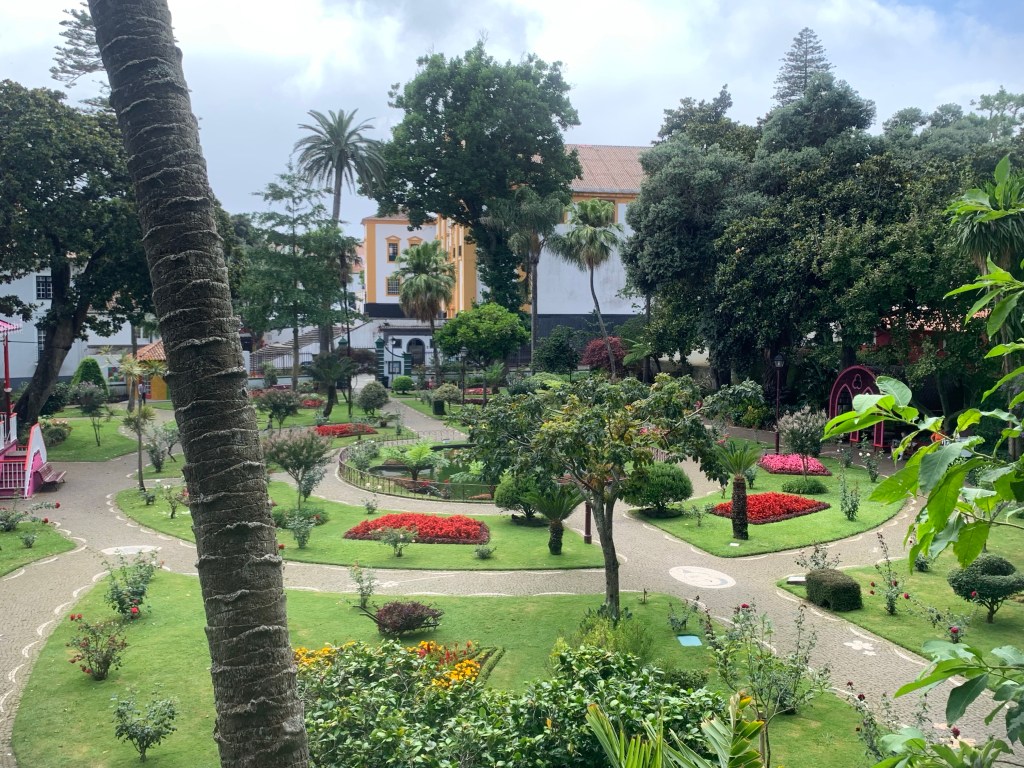
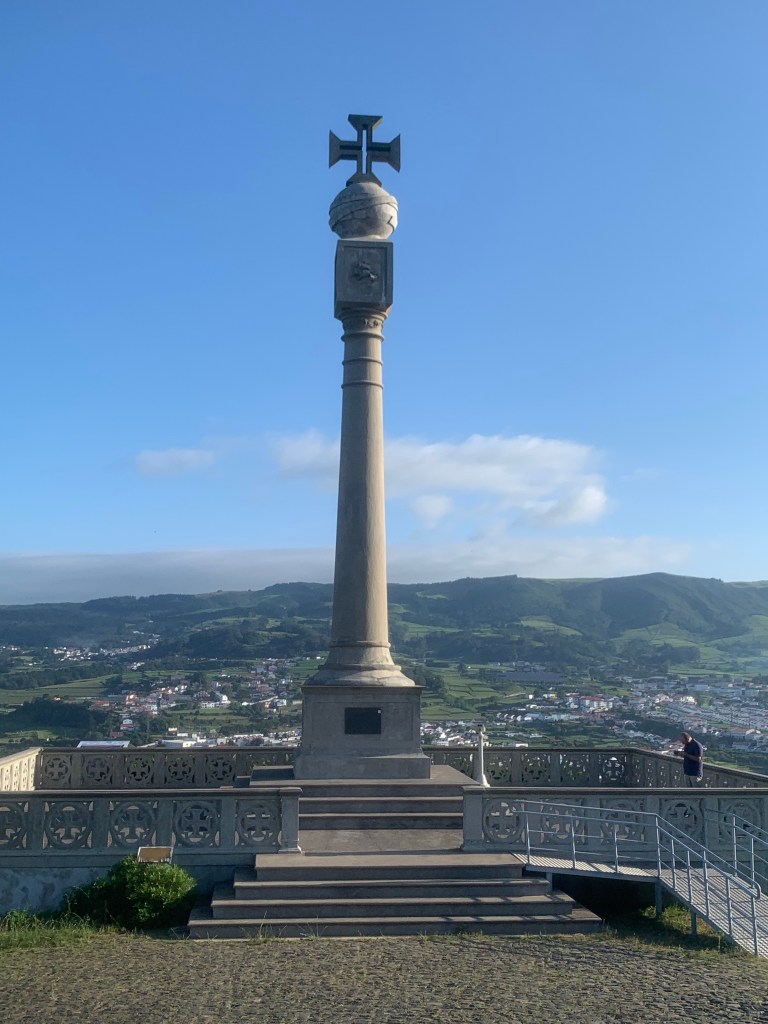
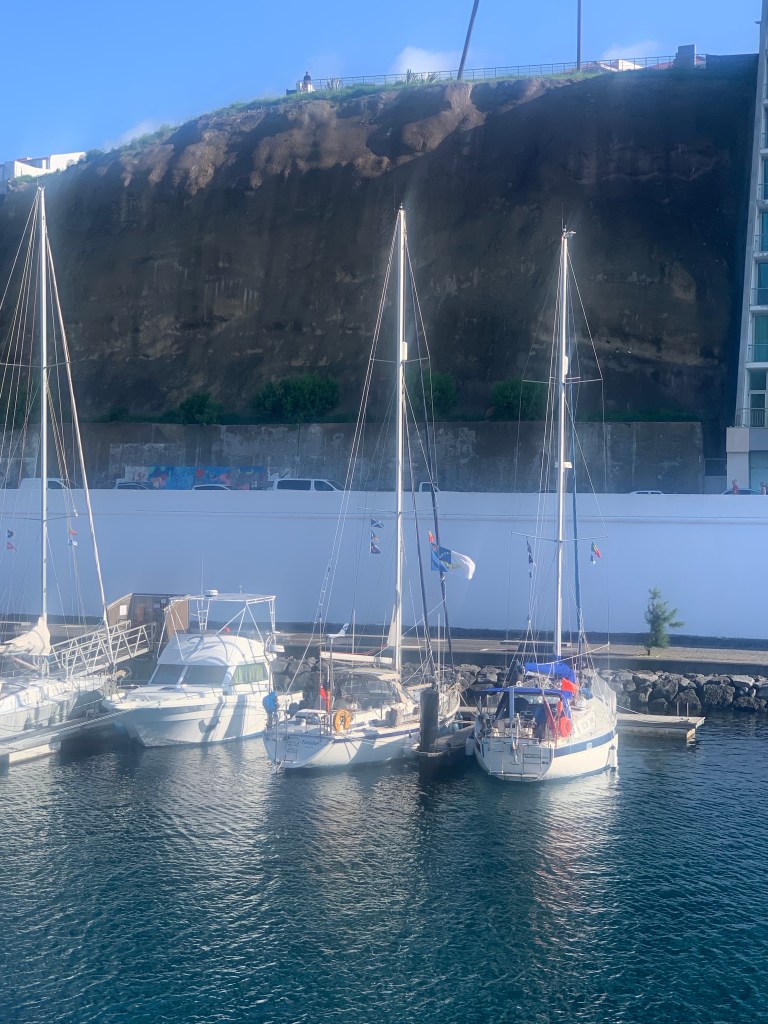
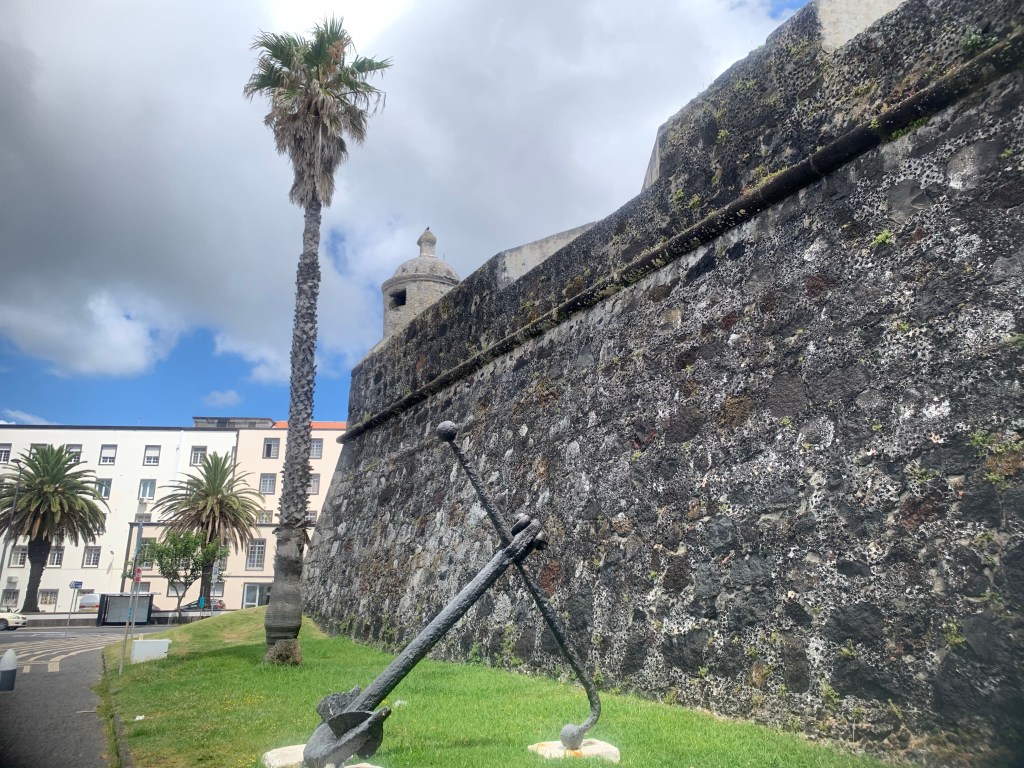
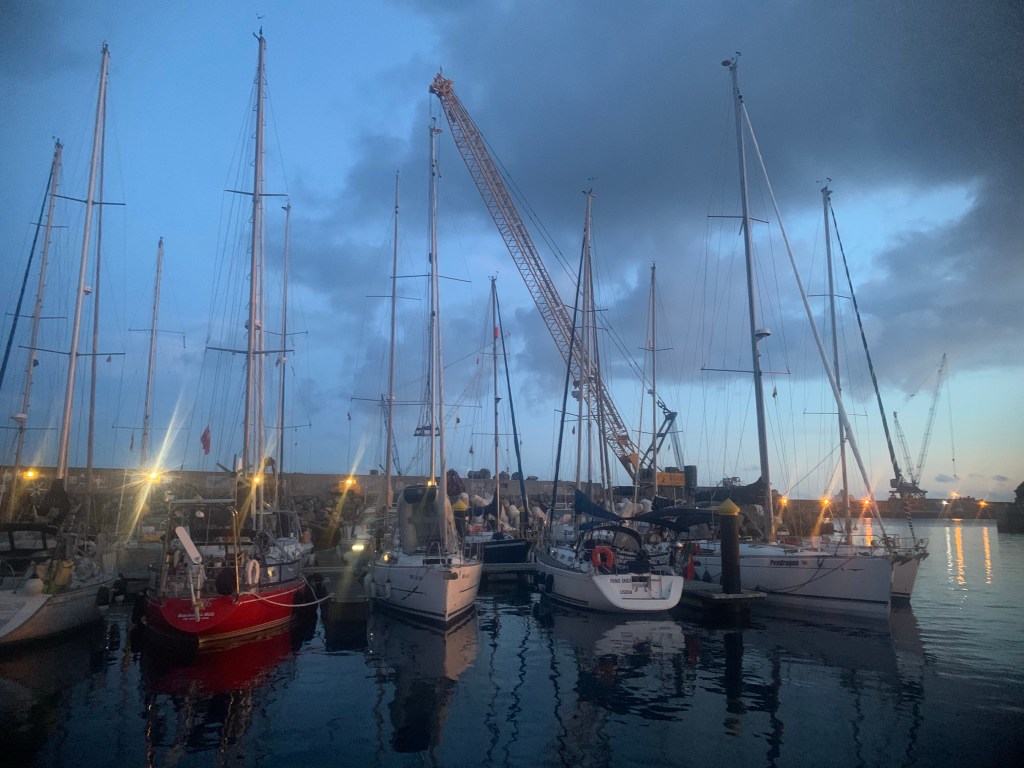
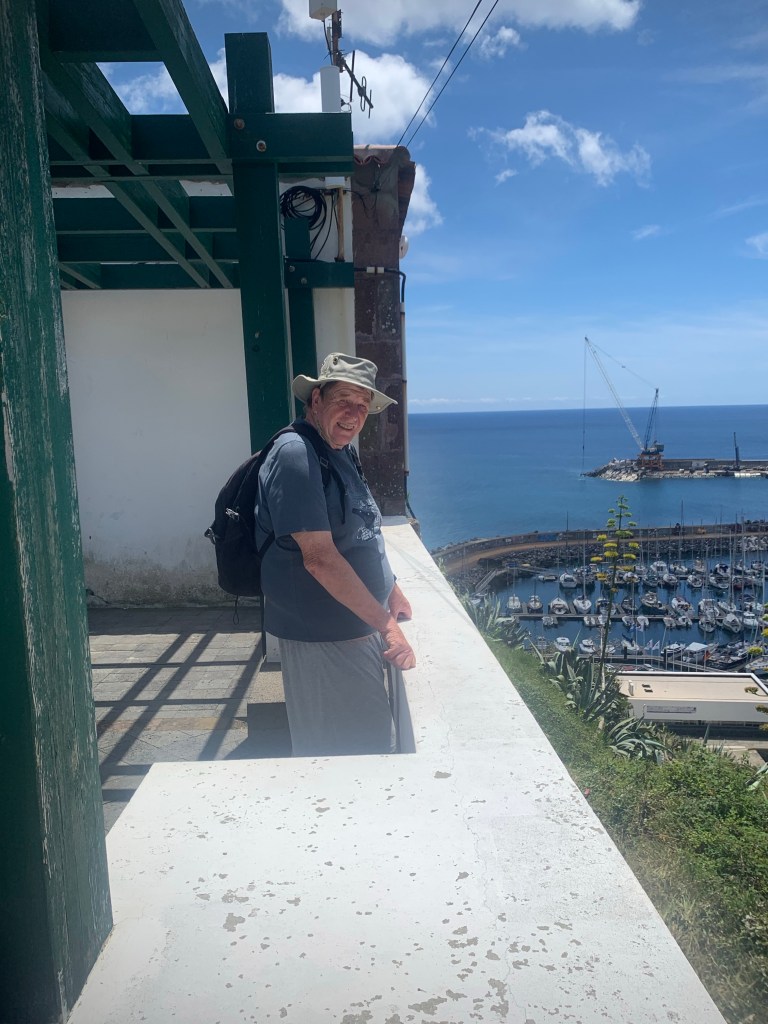
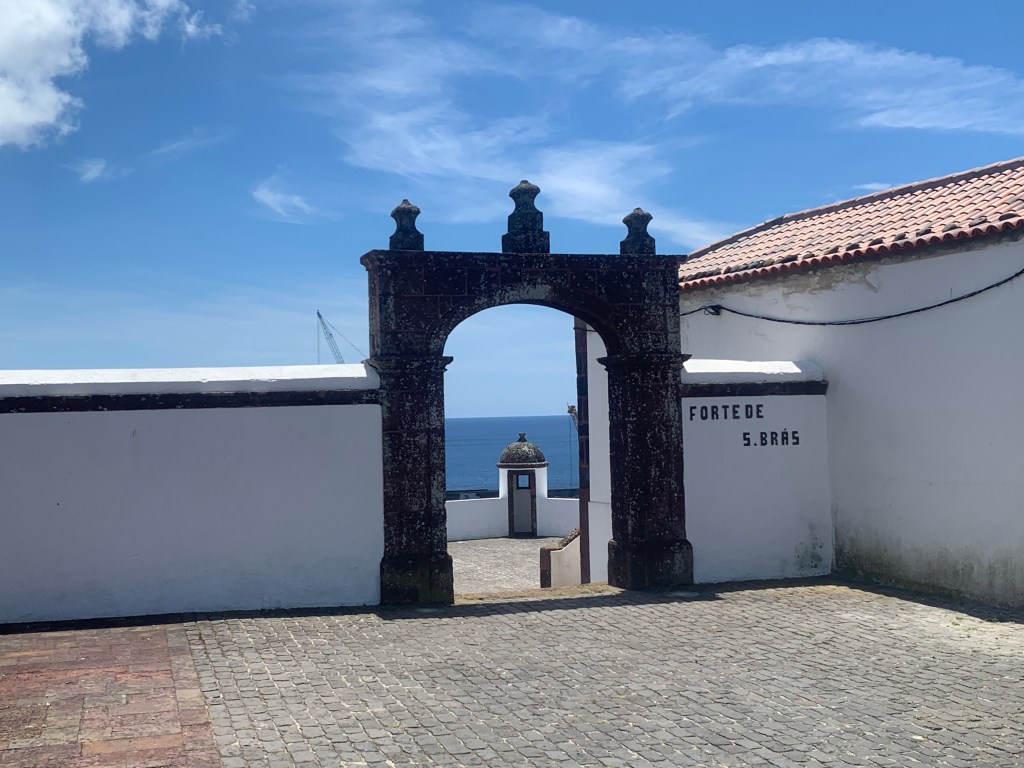
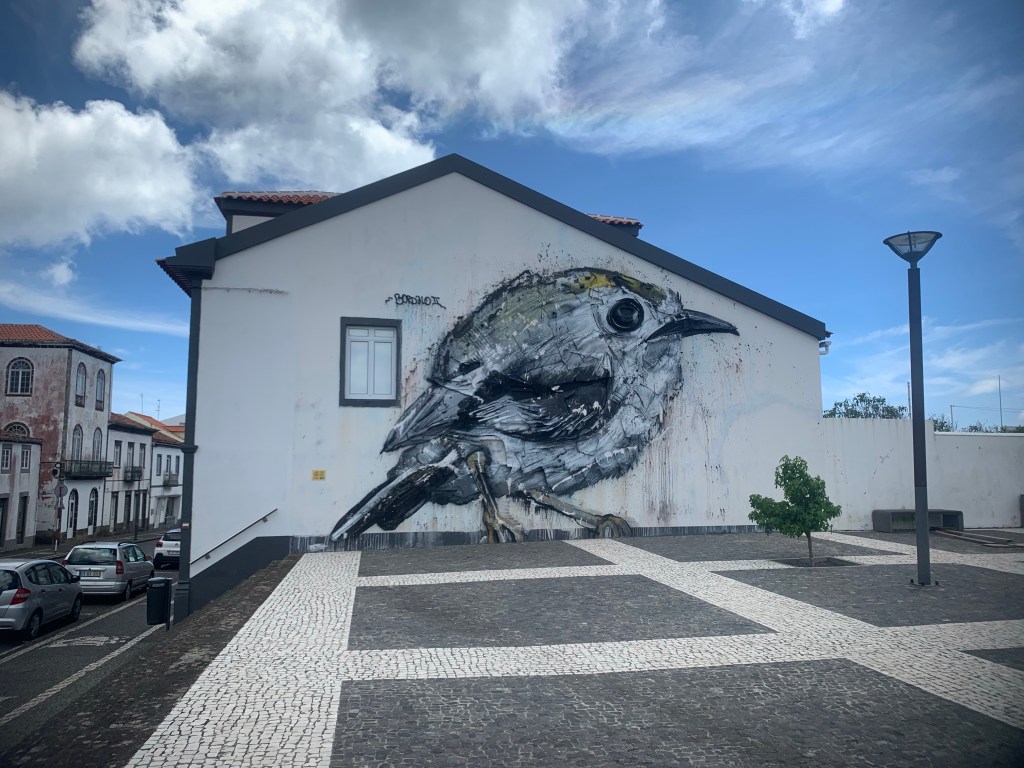
Terceira – the clue is in the name, the 3rd of the Azores to be discovered, the 3rd largest and our 3rd island too. We got a berth in the marina at Angra do Heroismo – this is a UNESCO World Heritage city, chosen for its traditional architecture, layout and possibly its part in winning independence from Spain. The whole city consists of steep narrow cobbled streets, sometimes linked by flights of steps, pretty colourful houses, even more colourful churches and little shops. It was partly destroyed in an earthquake in 1980 but rebuilt In the traditional style. It’s overlooked on one side by the peninsula of Monte Brazil (another extinct volcano) and site of the Sao Joao Baptista fort still in use by the Portuguese Armed Forces and on the other the Fort of Sao Sebastiao. There are walking/running tracks on Monte Brasil, also various picnic places, chapels, toilets, a football pitch, chickens and a cat sanctuary. So we wandered around the town – found 4 sewing / haberdashery shops -(useful as needed new elastic got my shorts), almost all these have gone at home. Went swimming and snorkelling in the bay – lots of pretty fish – in fact lots of fish in incredibly clear water in the marina. Went to the next big place Praia Vitoria on the bus – on our 2nd attempt- the buses DO NOT stop where Google maps says they do. And Anita ran around on Monte Brasil.
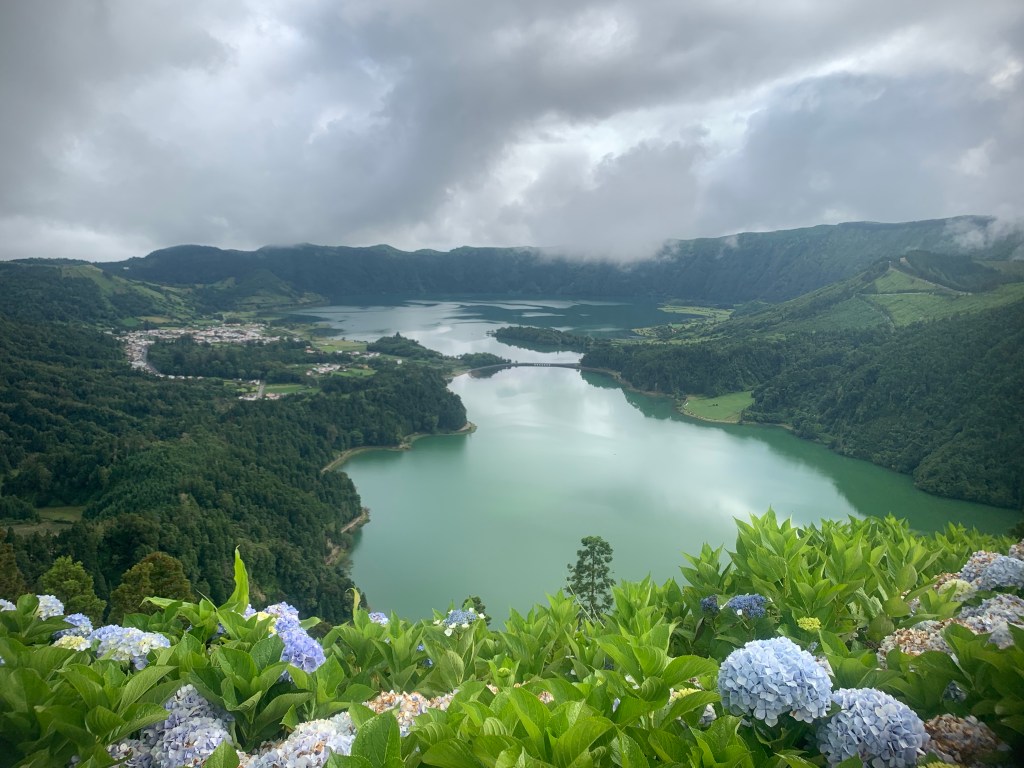
Nice trip to Sete Cicades and the Green and Blue lakes – apparently one of the 7 wonders of Portugal. Well the green one was green but it was rather cloudy so the blue one was a bit grey.
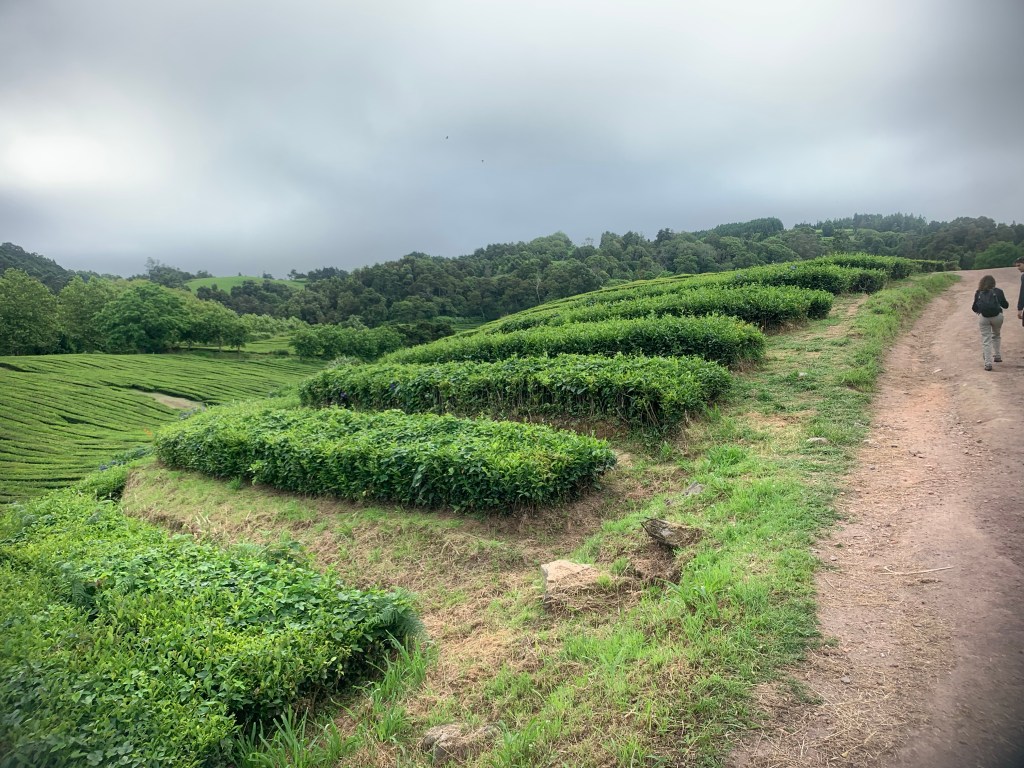
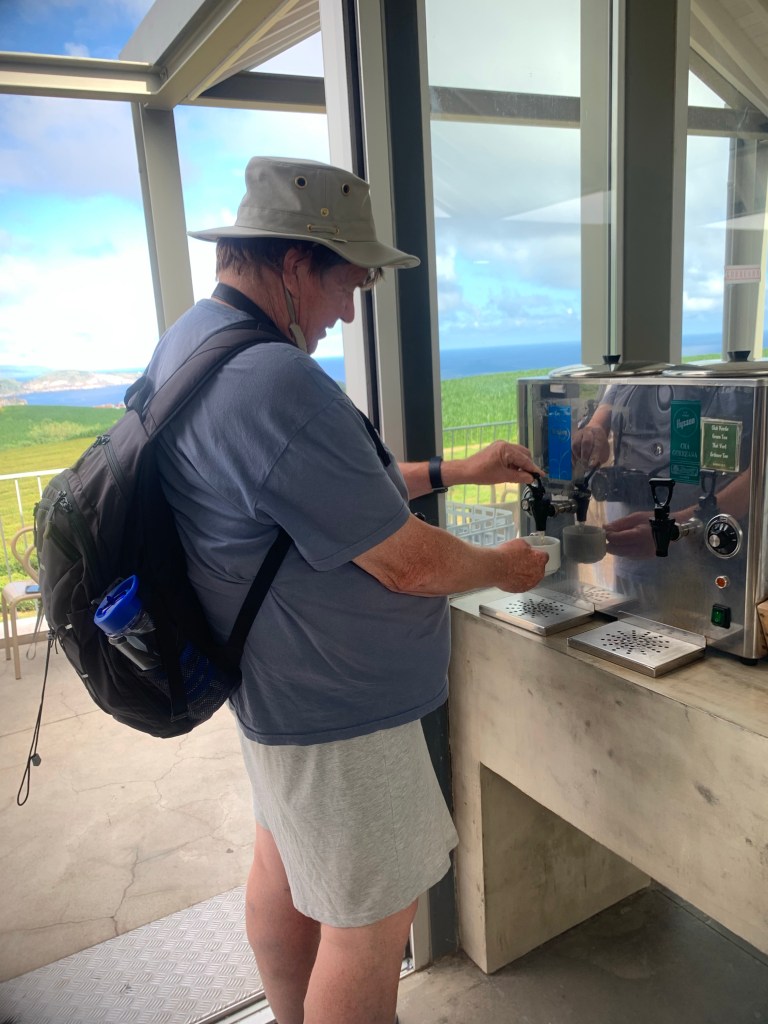
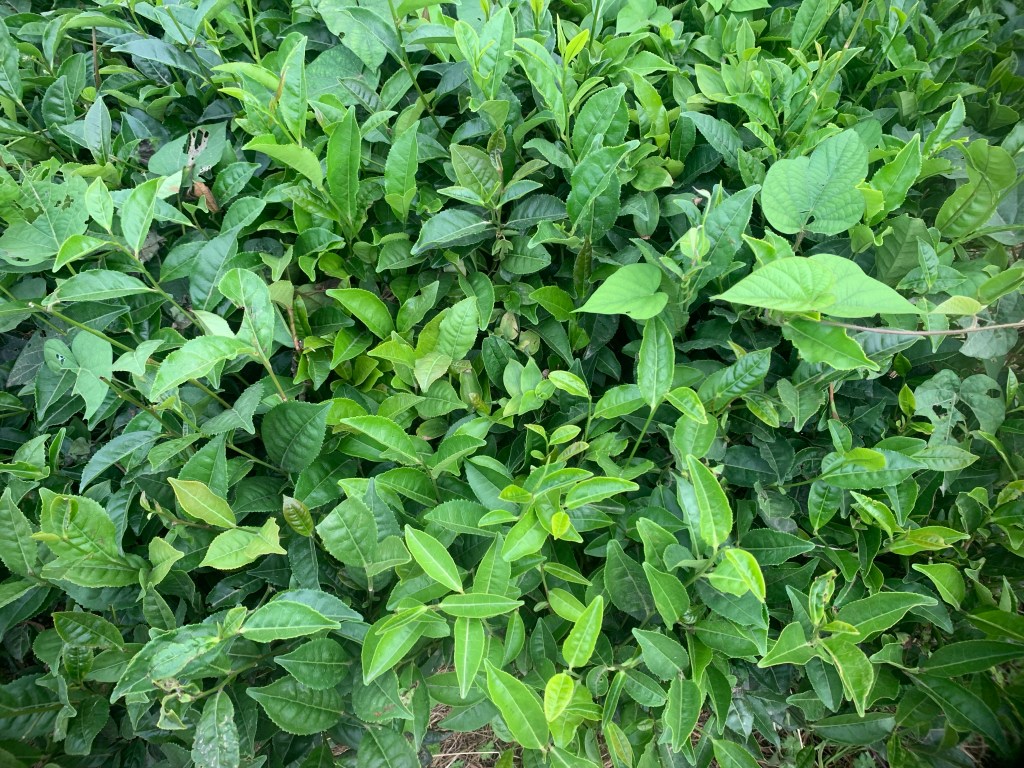
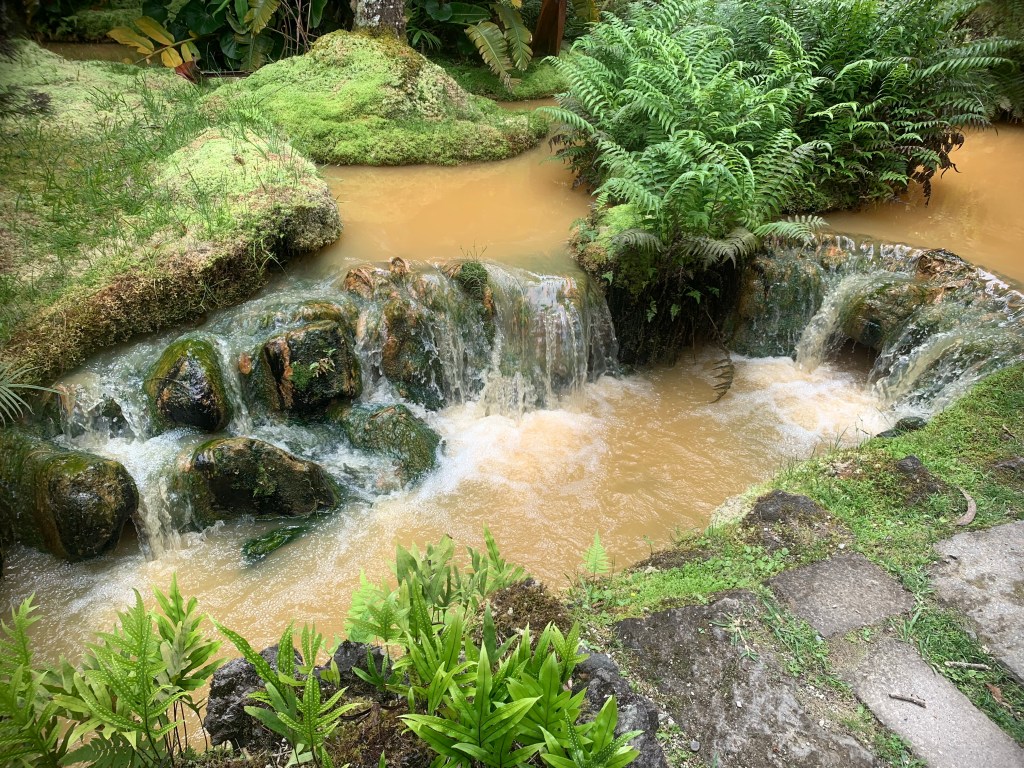
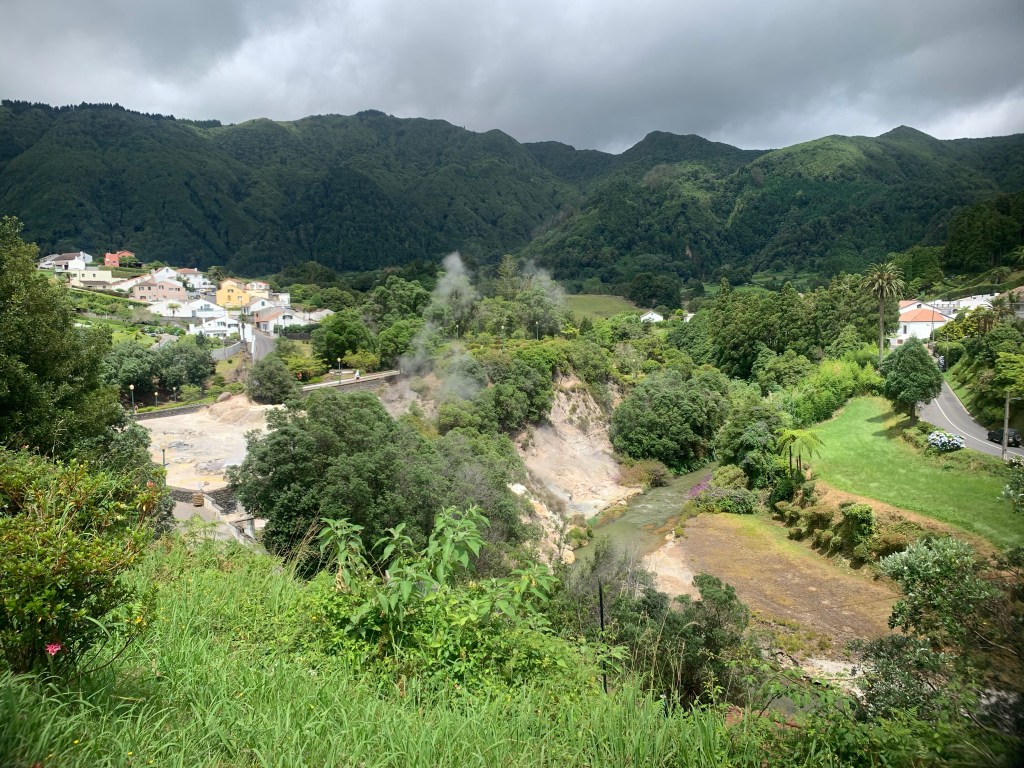
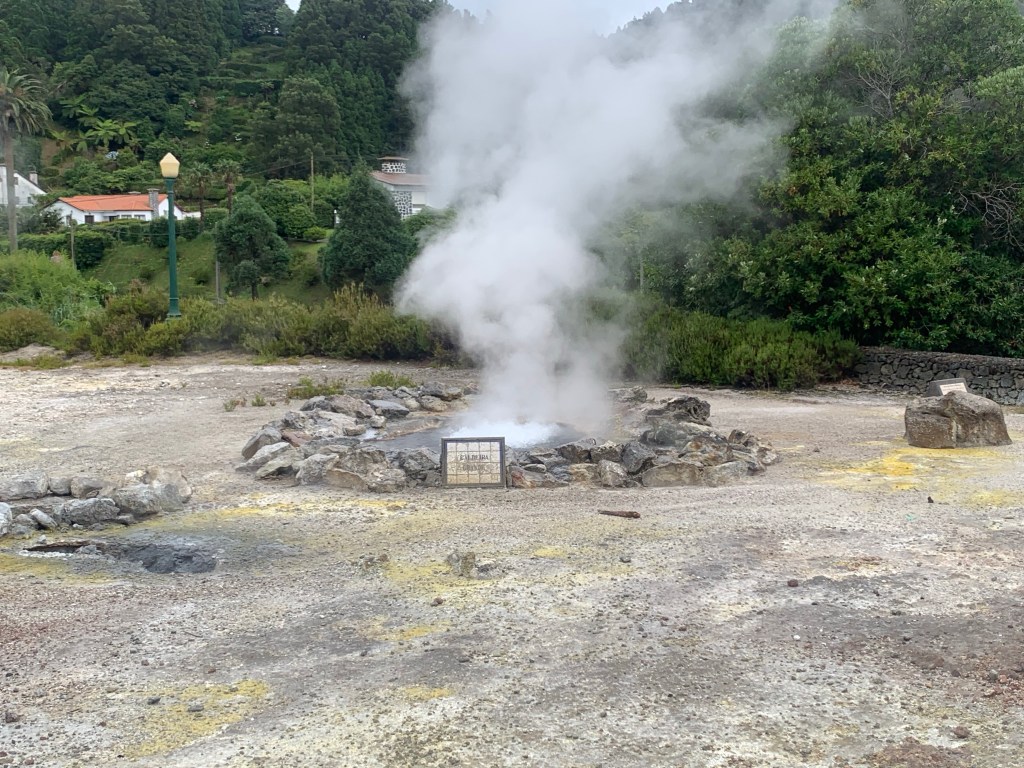
Sao Miguel is the biggest island in the Azores and Ponta Delgada is its biggest town. There is even an Expressway (fast road). First in the economy of the Azores is Dairy Produce, followed by Tourism, then fishing. In Sao Miguel there are more cows than people. We walked about exploring the city then made a tour of the Pineapple Farm. Sao Miguel used to grow more oranges than mainland Portugal but a disease wiped out the trees in the 29th century so oranges were replaced by Pineapples, tobacco and tea. We took a tour to the Lagos das Furnas in an interesting minbus where most of the roof could be opened. First stop a lookout on the North coast, then the tea factory. Initially they got some people from Macau to teach them the trade, both black and green tea are produced. Then to Furnas and a view of the crater lake. The last eruption here was circa 1640. Down the steep road to the village of Furnas in the crater and a visit to the impressive Terra Nostra gardens with a quick dip in the Geothermal pool – a startling yellow colour but not too sulphur smelling. Then lunch in the village, the traditional Coxido das Furnas, a mixture of meats, sausage and vegetables cooked for 7 hours by volcanic heat buried in the ground. Then visiting various amazing Fumaroles – they use them to cook sweet corn, before returning via Vila Franco do Campo where there is a small marina and an anchorage.
City GateMain church FortAncient treePineapple farmVery sweet Around Ponta Delgada Tea factory Terra Nostra gardens and thermal pool
Absolutely no wind last Wednesday so we were motoring from Santa Maria to Sao Miguel the next island, lovely sunny day. About 6 miles out (I presume) we ran over a net, just floating debris, green- blue polypropylene, would never have seen it. Wound round the prop and disabled the engine. The marina can only tow you in from just inside the harbour so we were trying to sail in no wind making one knot towards our destination. Then even that bit of wind went away so we are just drifting, no steerage way. The Maritime Police are monitoring our position and eventually they manage to organise us a v expensive tow (1200 euros for only 3 miles!) by a Sport Fishing boat. The Marine police were brilliant and at least stopped the guys with the boat from ripping us off any further (by threatening to recheck all their licences). We didn’t have much choice as no wind forecast for several days. At least there doesn’t seem to be any permanent damage to the engine. The engineer and the diver were not expensive. I did go and look with the snorkel next morning but would’ve taken me ages to clear it, was very tough to cut and took the diver with a tank about 3 mins. Otherwise it’s lovely here. Helpful marina, engineer and diver.
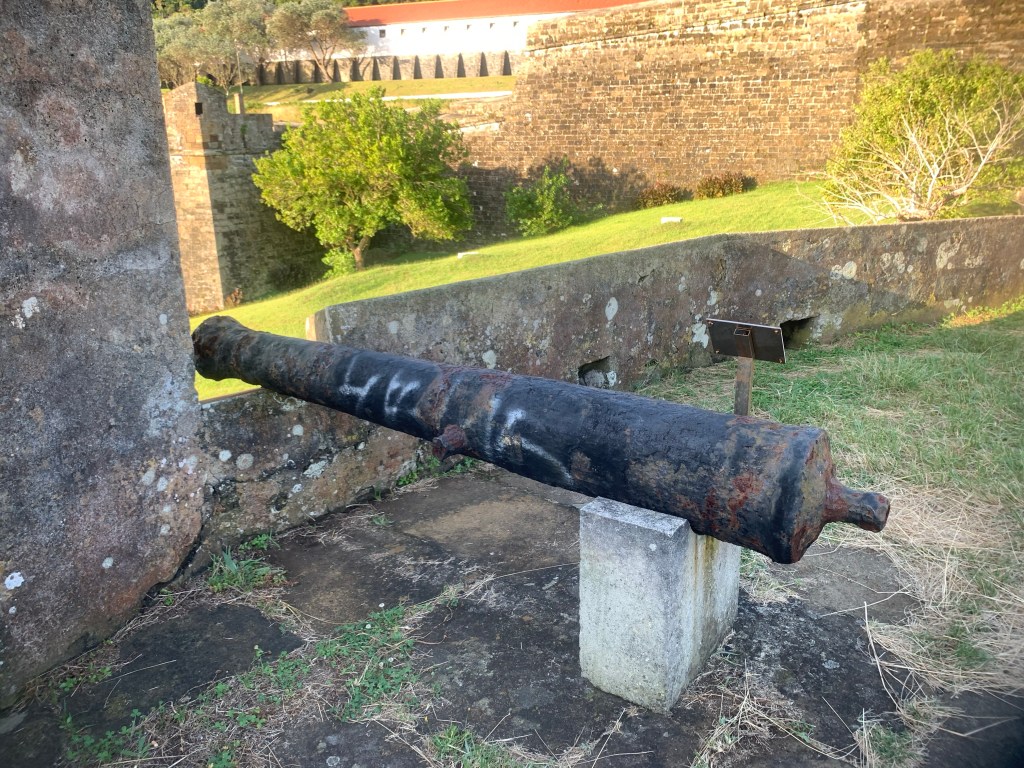
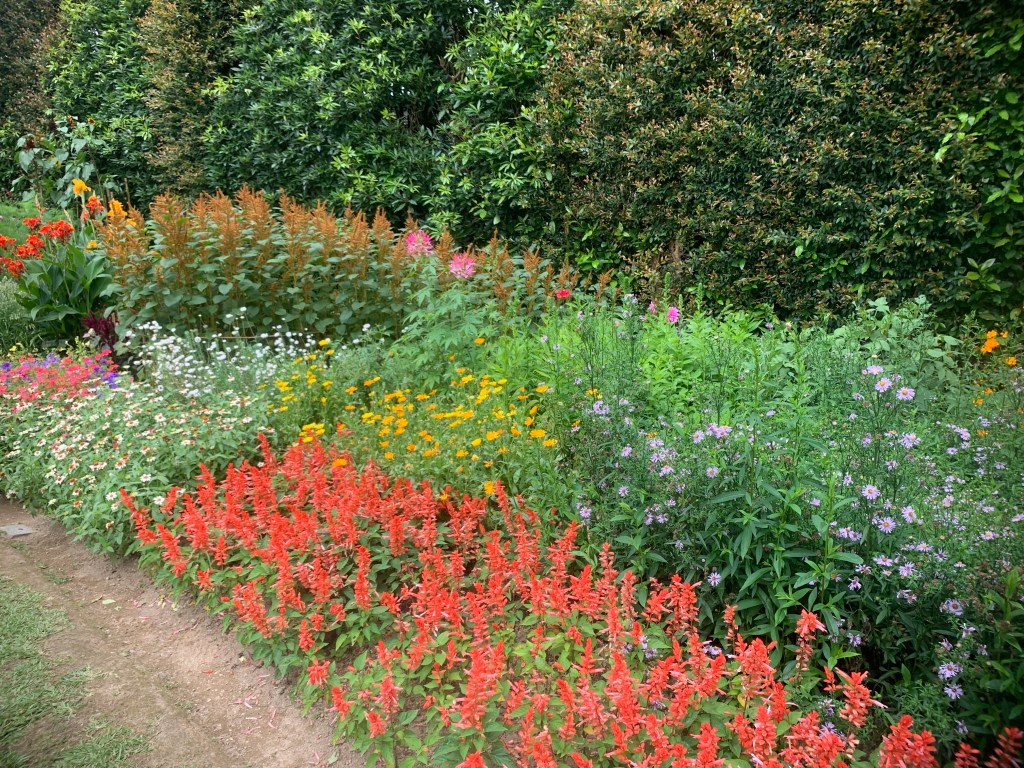
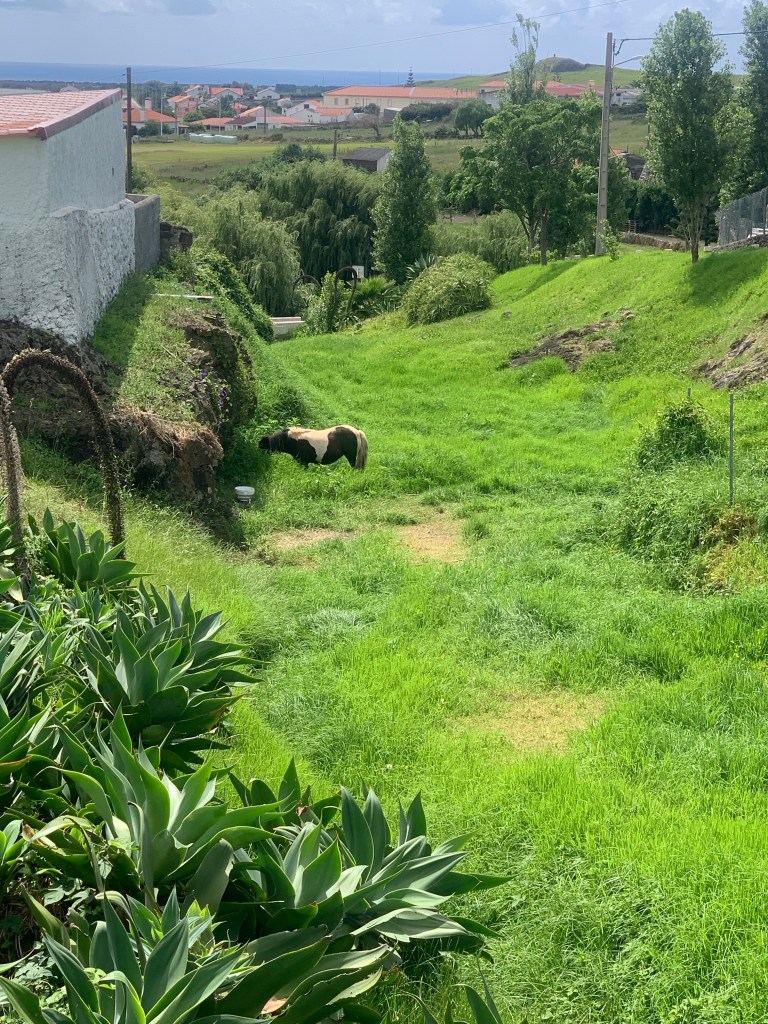
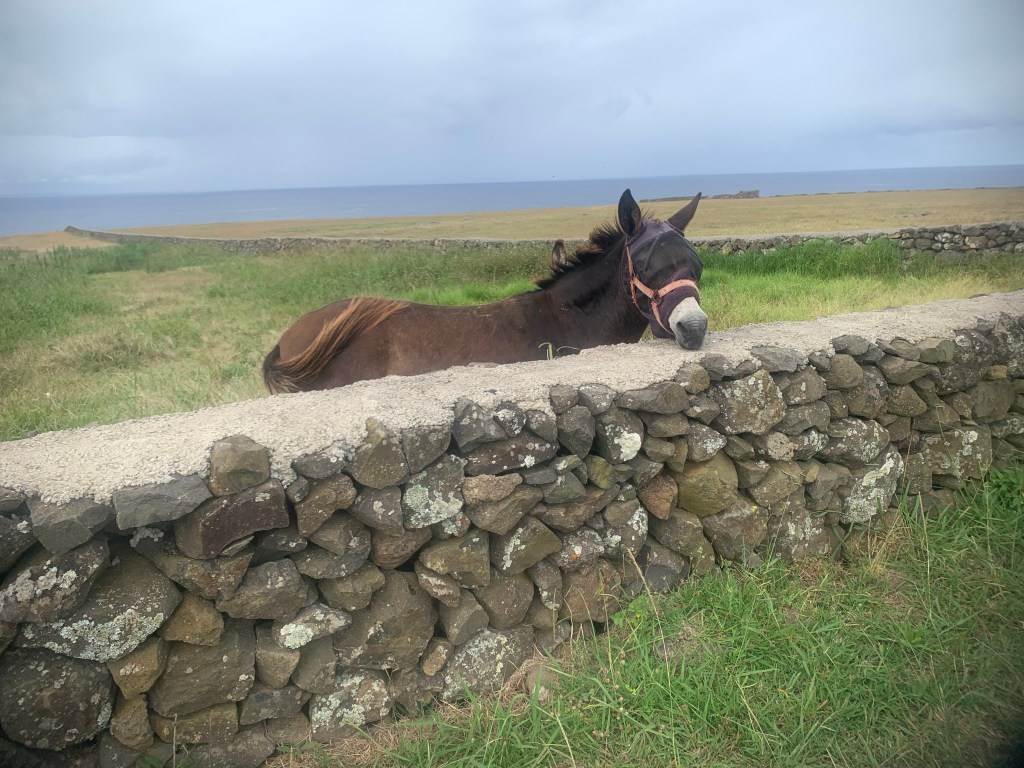
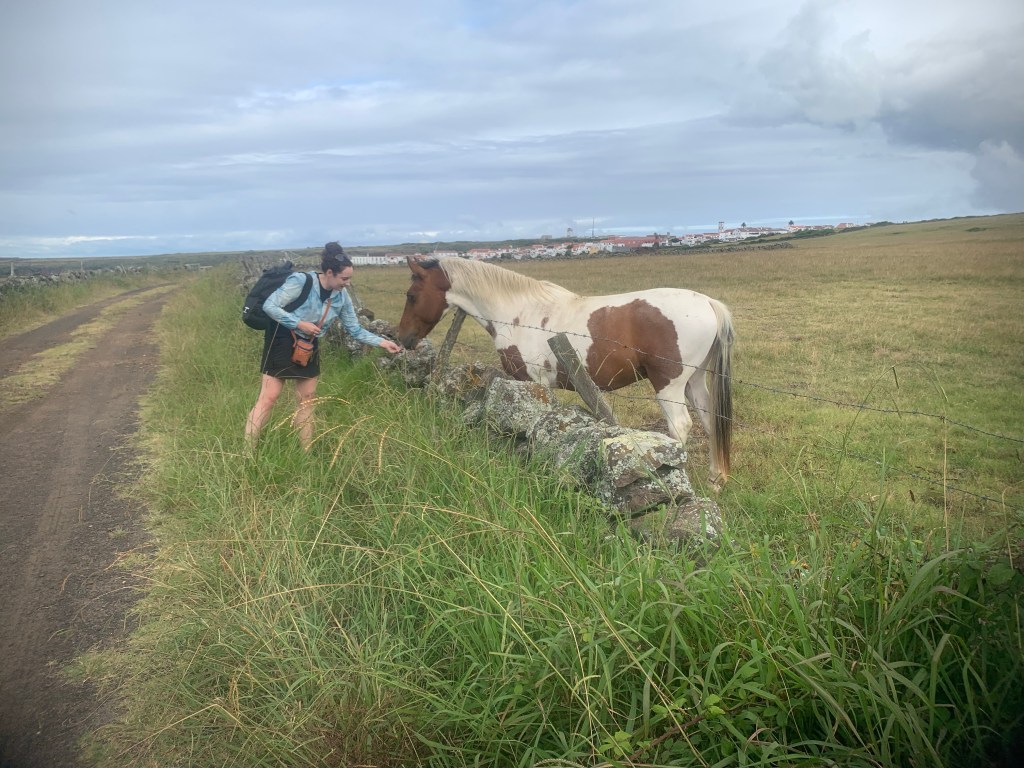
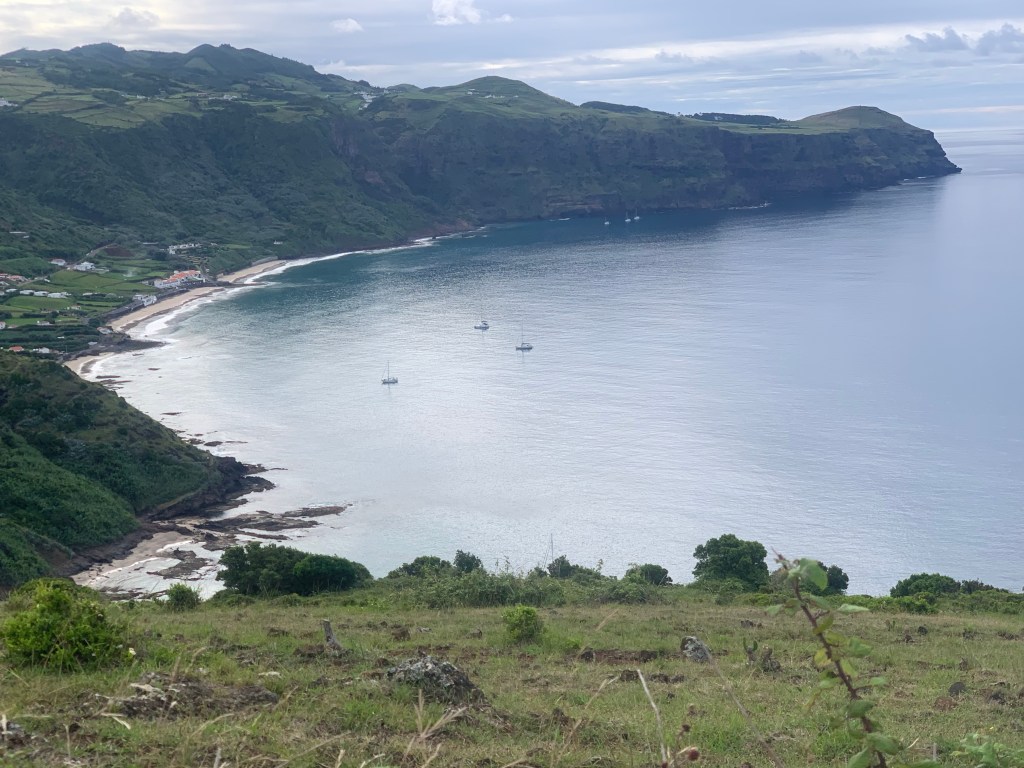
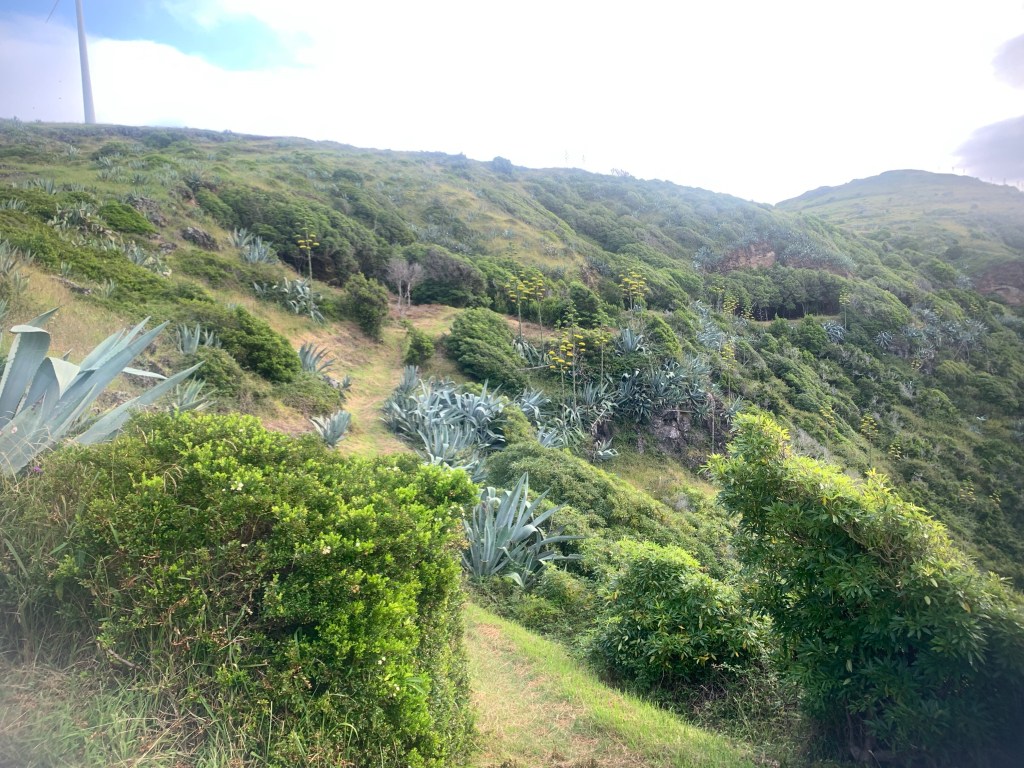
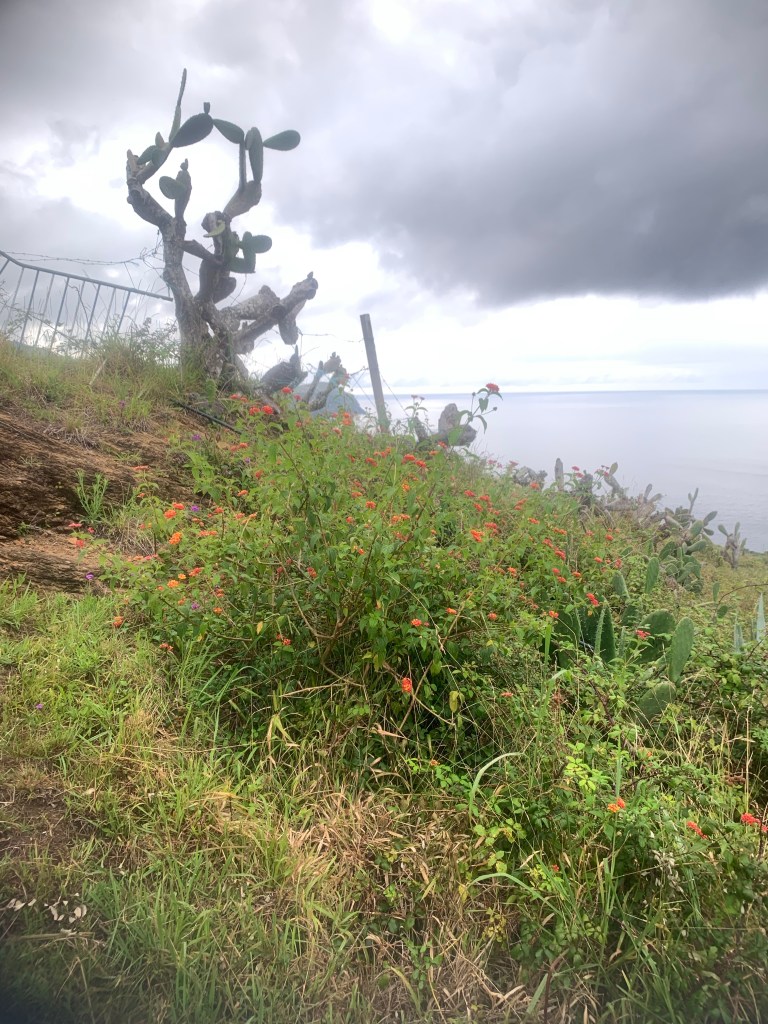
Santa Maria is a small, friendly, relaxed island. Geologically it’s the oldest in the Azores and was first inhabited in 1427. Vila do Porto has a small marina with an even smaller entrance. It’s a steep climb up to the fort (with cannons) behind which is the town. The place had been assailed by pirates – Moorish, French, English throughout its history. At the moment it is very green and lush with pretty flowers – apparently there’s been an unusual amount of rain, but not always so – there are many succulents, huge cactus and Mother in law’s tongue bigger than me. Lots of cows and pretty coloured horses, donkeys, geese, chickens on the countryside – or even in the town. Attractive inlaid pavements, narrow streets and pretty churches in the town. Fish is landed at the harbour, there is a ferry/cruise ship terminal but we saw no sign of either during the 5 days we were there. Like much of mainland Portugal there is building work going on – here on the harbour walls.
Inside the church OutsideWall artTown Hall once a conventMosaic Pavement Lots of flowers Lush grazing right by the supermarket
Santa Maria is a small, friendly, relaxed island. Geologically it’s the oldest in the Azores and was first inhabited in 1427. Vila do Porto has a small marina with an even smaller entrance. It’s a steep climb up to the fort (with cannons) behind which is the town. The place had been assailed by pirates – Moorish, French, English throughout its history. At the moment it is very green and lush with pretty flowers – apparently there’s been an unusual amount of rain, but not always so – there are many succulents, huge cactus and Mother in law’s tongue bigger than me. Lots of cows and pretty coloured horses, donkeys, geese, chickens on the countryside – or even in the town. Attractive inlaid pavements, narrow streets and pretty churches in the town. Fish is landed at the harbour, there is a ferry/cruise ship terminal but we saw no sign of either during the 5 days we were there. Like much of mainland Portugal there is building work going on – here on the harbour walls.
Inside the church OutsideWall artTown Hall once a conventMosaic Pavement Lots of flowers Lush grazing right by the supermarket
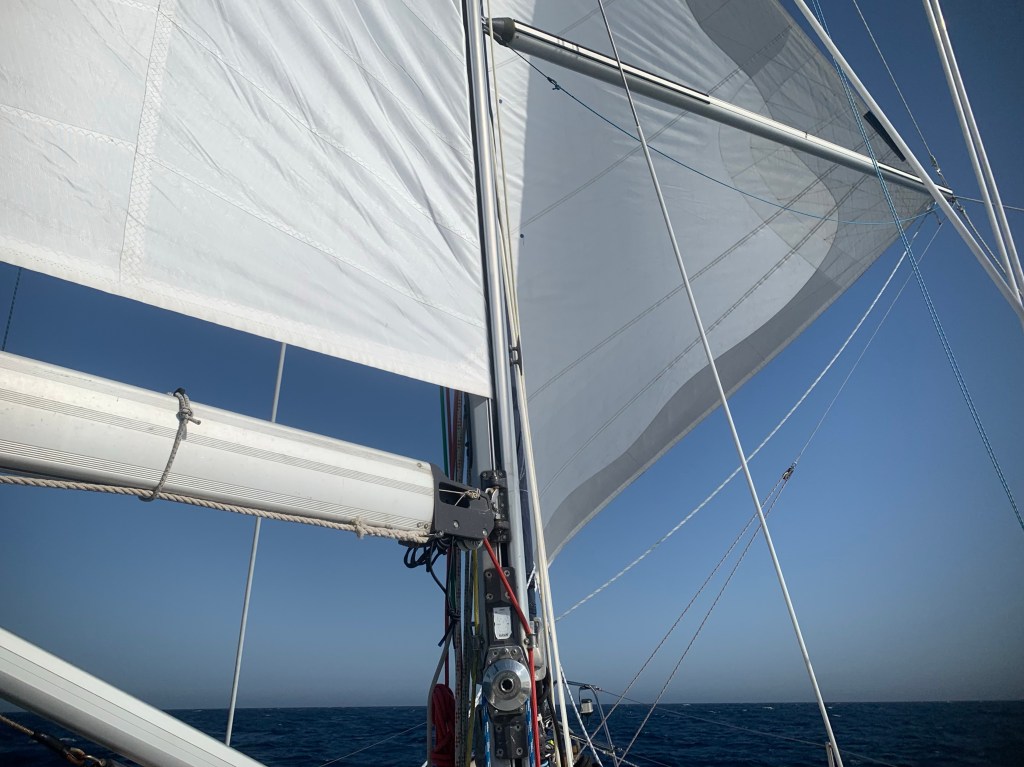
We finally left Lagos on Thursday 6th, a short trip along the coast that day (staying inside the 20m contour and inside the Tuna nets to avoid Orcas) quite windy when we anchored at Sagres. Next day we coast hugged until Cape St Vincent then set course for the Azores, keeping north of the Traffic Separation Scheme. It was a relief to get away from the coast and the threat of Orca attacks, also all the fishing buoys, and to get into a proper watch system for the ocean passage. Wind at the start died away, some motoring, some days sailing really slowly, one flying the mended cruising chute, another sailing peacefully at 3 to 4 knots on a close reach in about 7-9 knots apparent wind – idyllic with sunshine and bright blue seas, we aren’t in a hurry. Then lots of wind from ahead for the last two days. A good wind shift allowed us speed towards our destination and arrive on Friday afternoon at the small marina at Vila do Porto on the most eastern of the Azores islands Santa Maria. Saw 2 large pods of dolphins and some pilot whales as we got near Santa Maria;also started to see seabirds at this point some terns and flocks of Corey’s Shearwater.
Leaving Lagos Quite shallow at low tide Cape St VincentJust the occasional shipThe repaired cruising chute Landfall at Santa MariaPont do CasteloBig Azores courtesy flag
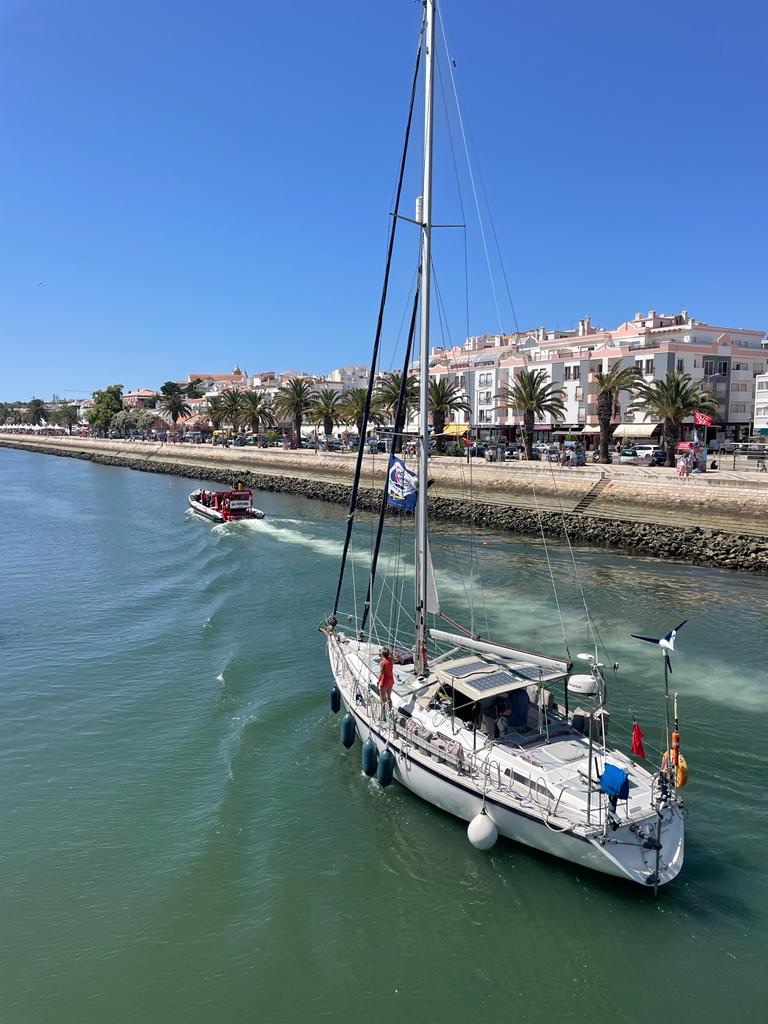
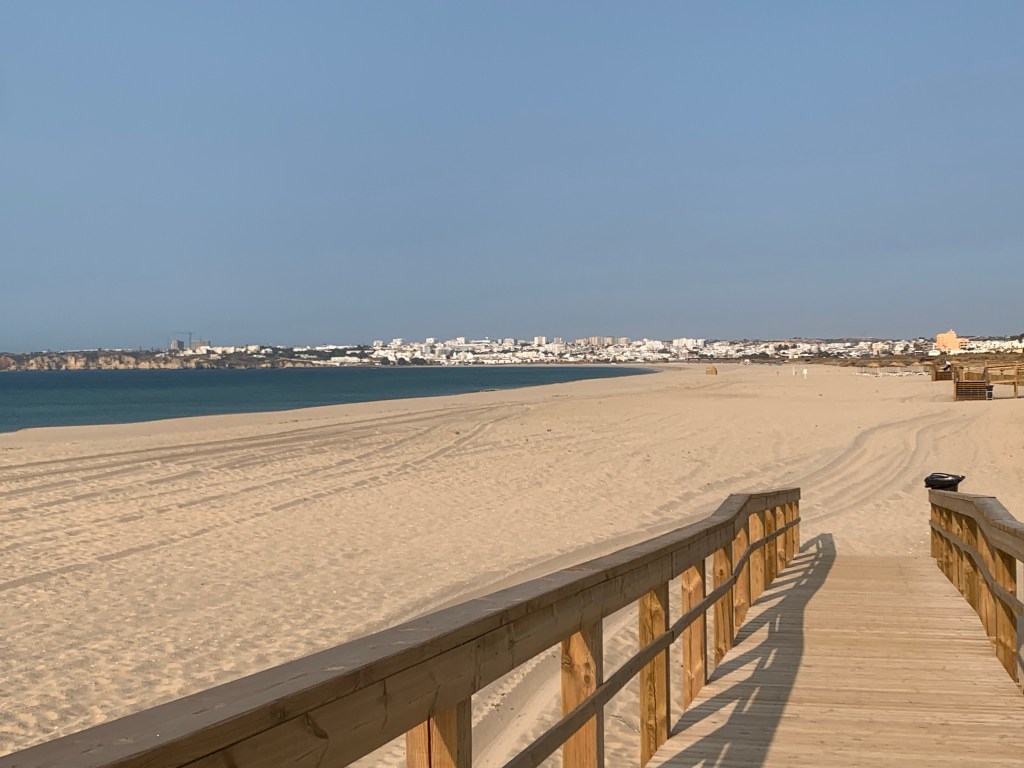
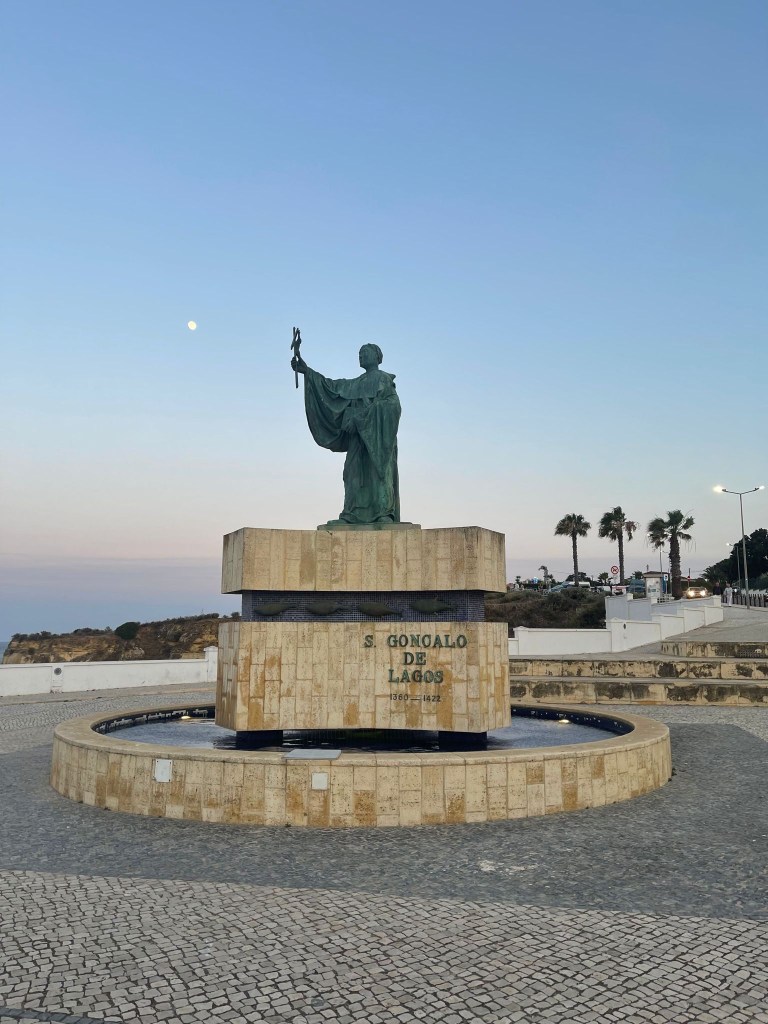
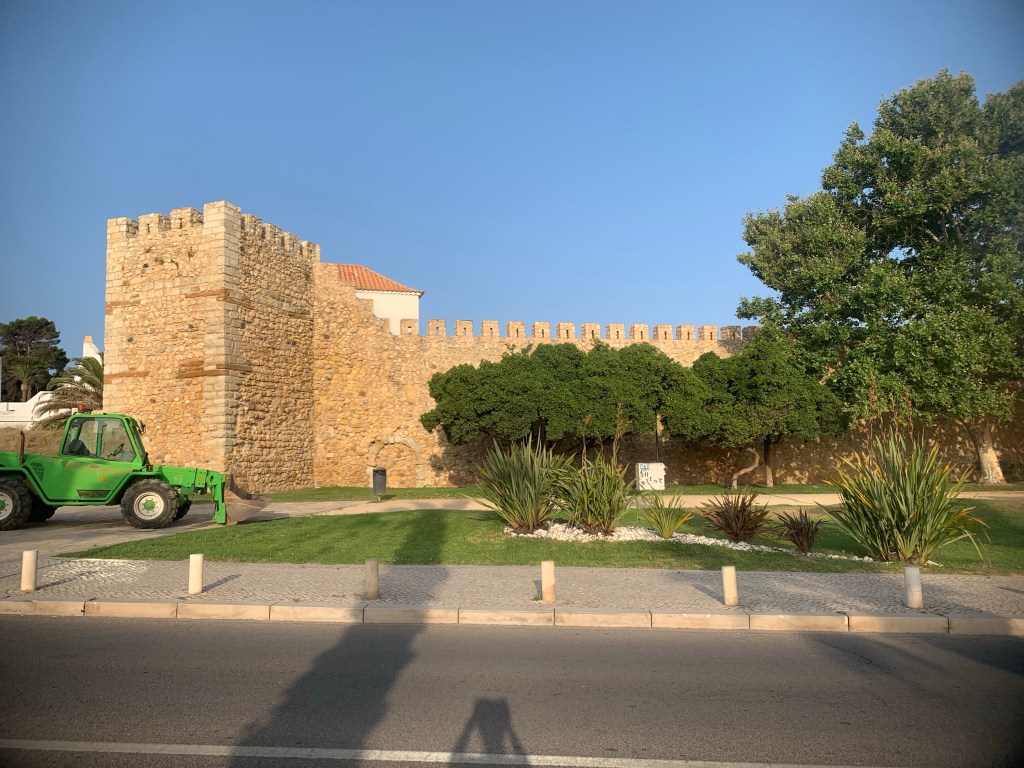
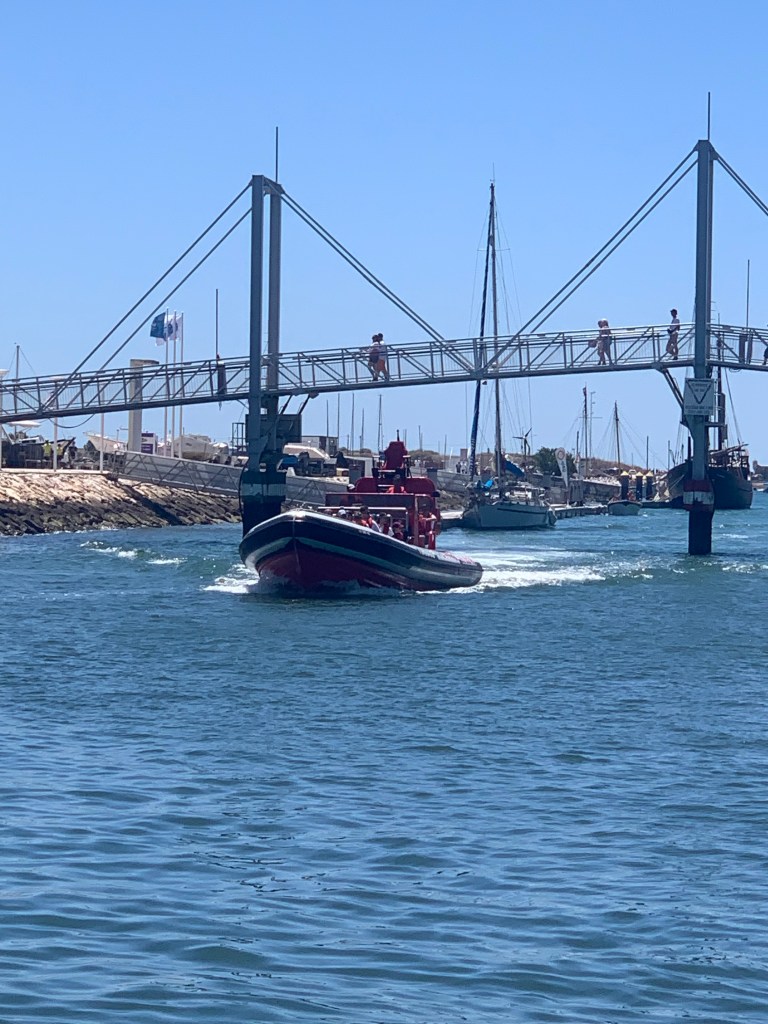
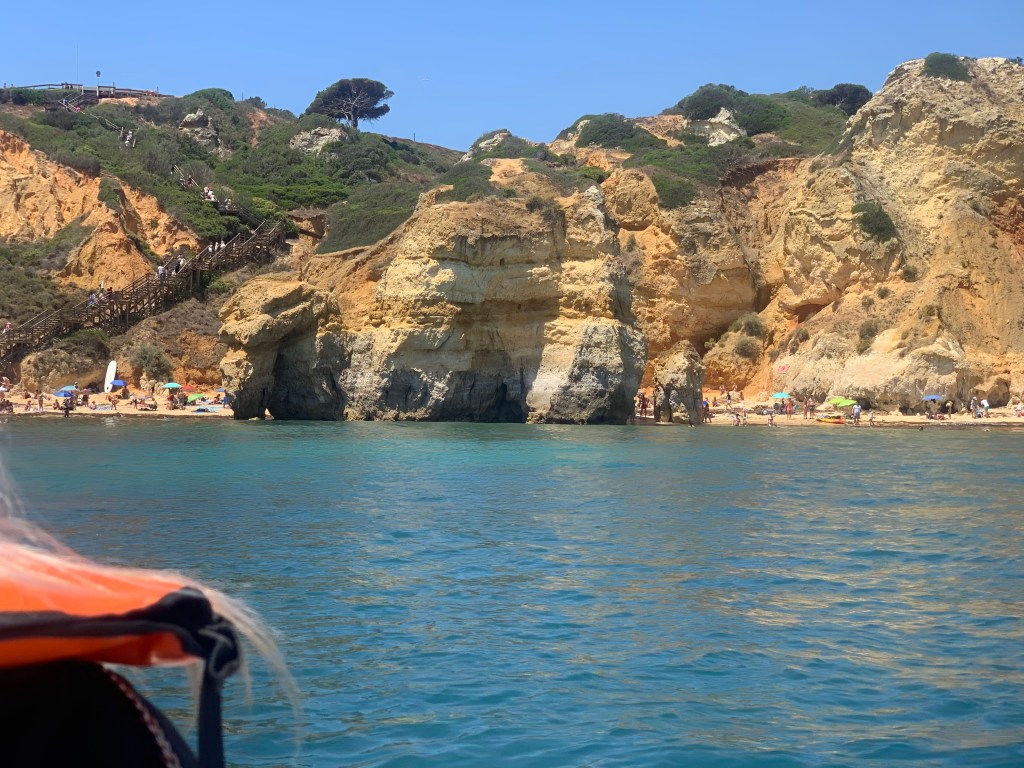
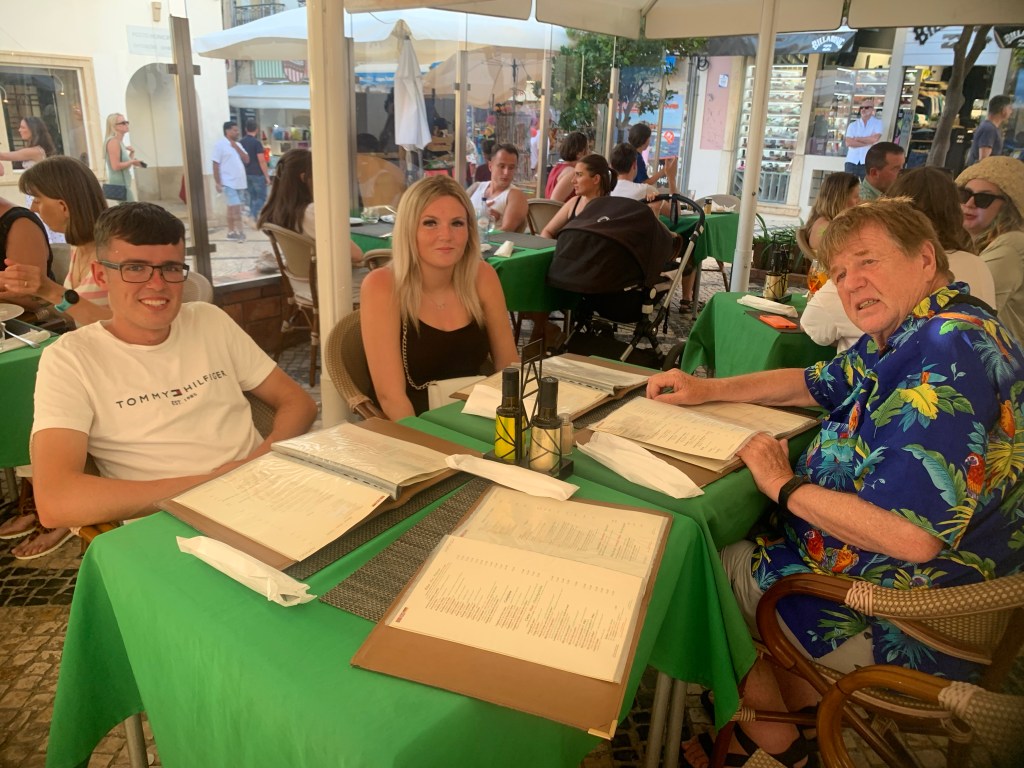
The port of Lagos was started by the Phoenicians and Greeks then the Romans, it was important during the Age of Discovery and the ships of Henry the Navigator were built there. On the East side of the river there is the vast expanse of sand that is Meia Praia, on the other side there are smaller secluded beaches among the amazing grottoes, towers and caves of coloured sandstone leading out to Ponta da Piedade. You can see the 16th century walls enclosing the old town with a maze of narrow cobbled lanes, now full of bars, restaurants and nightclubs plus shops selling tourist stuff. Nephew Andrew Driver and girlfriend Lauren Ellis joined us for a week. The old ones Steve and I looked round museums and wandered round the picturesque old town. The young ones Lauren and Andrew also frequented the old town but staying much later as they investigated the various entertainments on offer and spent time “people watching”. We took the boat out one day going slowly along the sandstone rock formations to Ponta da Piedade then along to Praiacda Luz where we anchored for lunch. The only person who made use of the beaches to swim etc was me. Lauren and Andrew went on the little tourist train that circled the city, and for a trip for dolphin watching in a very fast big RIB. All 4 of us went for a trip in a small tourist boat that could go in and out of the caves and tunnels.
The port of Lagos was started by the Phoenicians and Greeks then the Romans, it was important during the Age of Discovery and the ships of Henry the Navigator were built there. On the East side of the river there is the vast expanse of sand that is Meia Praia, on the other side there are smaller secluded beaches among the amazing grottoes, towers and caves of coloured sandstone leading out to Ponta da Piedade. You can see the 16th century walls enclosing the old town with a maze of narrow cobbled lanes, now full of bars, restaurants and nightclubs plus shops selling tourist stuff. Nephew Andrew Driver and girlfriend Lauren Ellis joined us for a week. The old ones Steve and I looked round museums and wandered round the picturesque old town. The young ones Lauren and Andrew also frequented the old town but staying much later as they investigated the various entertainments on offer and spent time “people watching”. We took the boat out one day going slowly along the sandstone rock formations to Ponta da Piedade then along to Praiacda Luz where we anchored for lunch. The only person who made use of the beaches to swim etc was me. Lauren and Andrew went on the little tourist train that circled the city, and for a trip for dolphin watching in a very fast big RIB. All 4 of us went for a trip in a small tourist boat that could go in and out of the caves and tunnels.
The closure of the marina and harbour of Sines forced a change to the rally programme, the authorities would not even allow the rally to anchor in the port. Some boats stopped overnight at Sines anyway or at other anchorages.
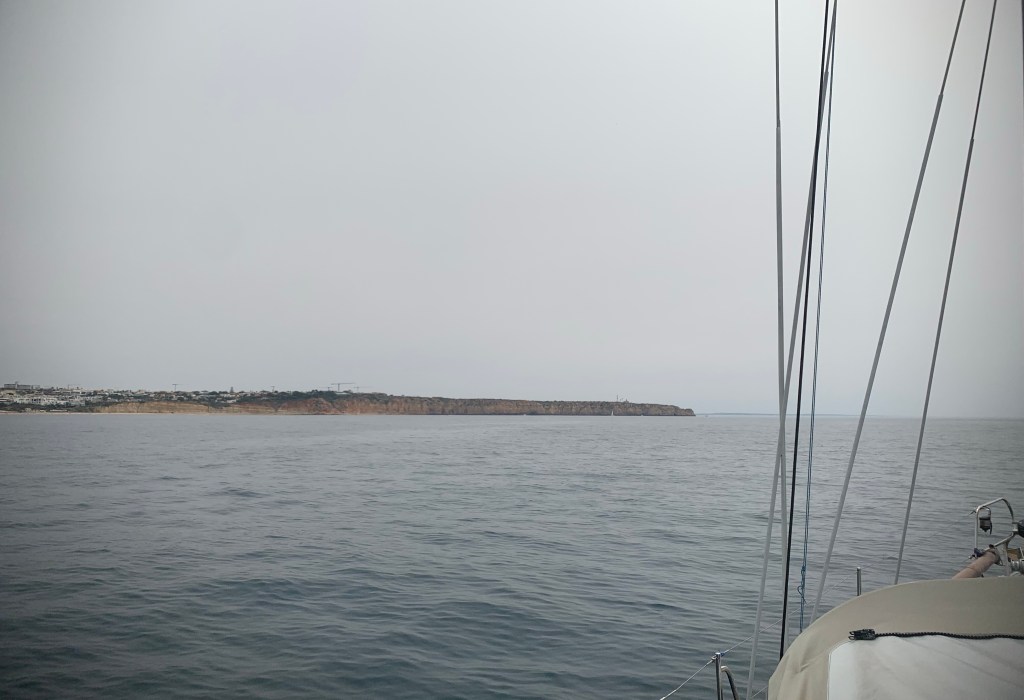
We elected to sail the 125 miles overnight – major worries were the fishing buoys lying in wait to snare the unwary and the possibility of attacks by Orcas. This still seems almost unbelievable and very sad, but since 2020 there have been an increasing number of interactions between yachts sailing around the Iberian Peninsula and a group of Orcas that inhabit these waters. The Orcas group together to barge and attack the steering gear of the yachts, in some cases simply biting off the rudder! Many yachts have been disabled with wrecked steering gear and a few have sunk. Of course large numbers have also moved safely through the area. The reports so far this year had them around the Gibraltar Strait. They follow the Tuna and just before we set off they seemed to be moving west with sightings in the Algarve and off Cape St Vincent. Wind came up and we were bowling along merrily reefed and wing and wing (Timshel sails very well like this) when we got reports on the WhatsApp from Assifa who had just had an Orca attack – luckily no serious immediate damage to boat or people. Their position was right on our route and everyone headed further onshore to avoid it. Silly in a way as the Orcas were unlikely to have stayed in the same place, but apparently they don’t like shallow water so much and it is recommended to stay within the 20m contour – difficult under sail along a rocky coast. Wind died during the night and others motored past – at one point 6 rally yachts on AIS all close in the darkness. We sailed very slowly downwind inshore. We heard of 2 further attacks taking place near to Sines; some of our rally friends were close by having just left there. Very lively conditions of wind and swell at Cape St Vincent had us hurriedly reefing down before gybing. After that we sailed east as close inshore as the fishing gear allowed – maybe we should have gone inside it all as we saw one yacht doing. We had our Orca defences ready in the cockpit, sand (to confuse their echolocation) metal pipes etc to make noise, knowing about the attacks on A’assifa and others so close made it all very real. The wind died completely just before we got to Lagos so we motored in the sunshine feeling lucky to have arrived unscathed. We admired the amazing caves, grottoes and towers of coloured sandstone. Dolphins playing had attracted a whole flock of tripper boats, we just wanted to past out of the way into the harbour. Lovely to be met by our yellow shirts Bev and Alvaro yet again. We were pretty tired – overnight passages are the worst especially inshore as you don’t get a chance to get into the watch system and don’t know how many times we gybed, but it was great later on to see the last rally boats safe in port.
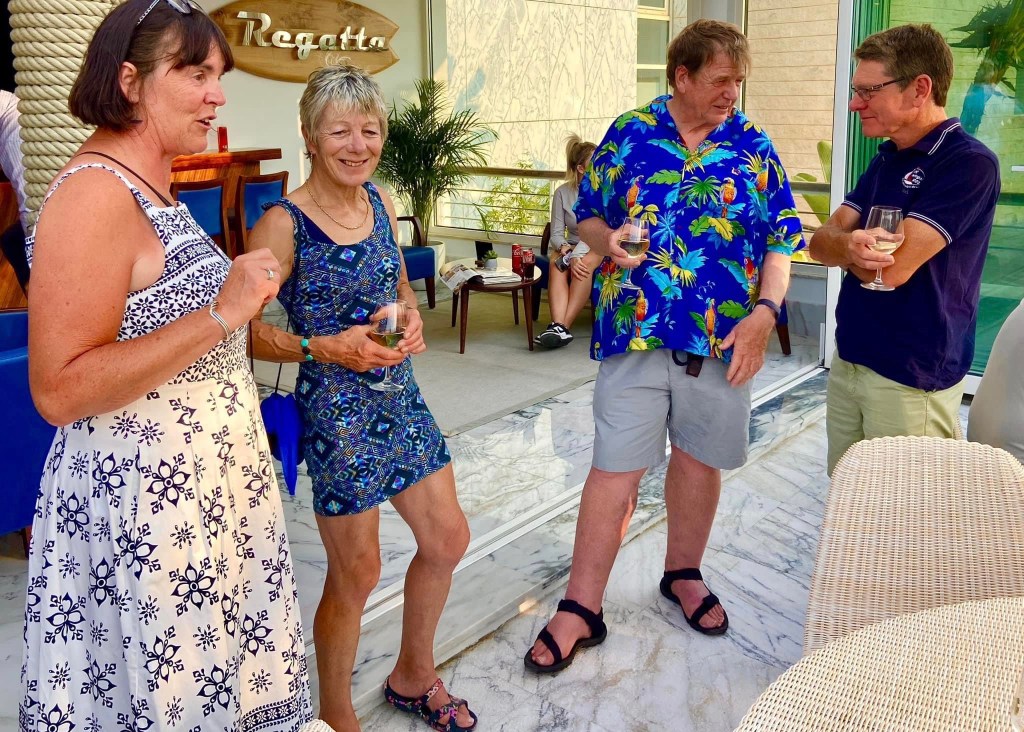
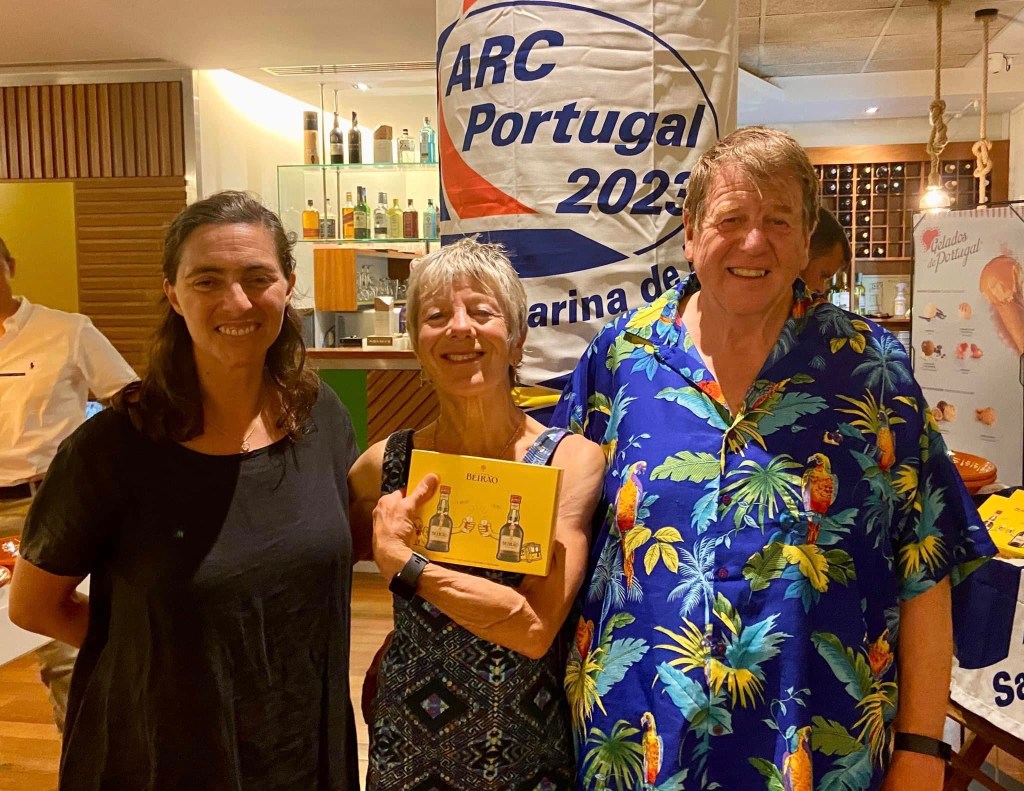
At the dinner on Wednesday we were surprised to receive two prizes – one I think for least motoring hours (28 mins) the last leg (stubbornness again) and the other, a nice Portuguese pottery dish awarded for berthing really really slowly. Almost everyone got an award.
Can’t believe this is the finish, the trip seems to have gone by so fast and will be so sad to say goodbye to our rally friends.
Going well downwind well reefedCape St Vincent Pt de SagresAmazing towers and grottoesNear Ponta da PiedadeLagos marinaArrival AlongsideCode flags taking off in the breezeThe final partyFirst prize for the legThink this one was for berthing very calmly and slowly Dinner






















































 Timshel81