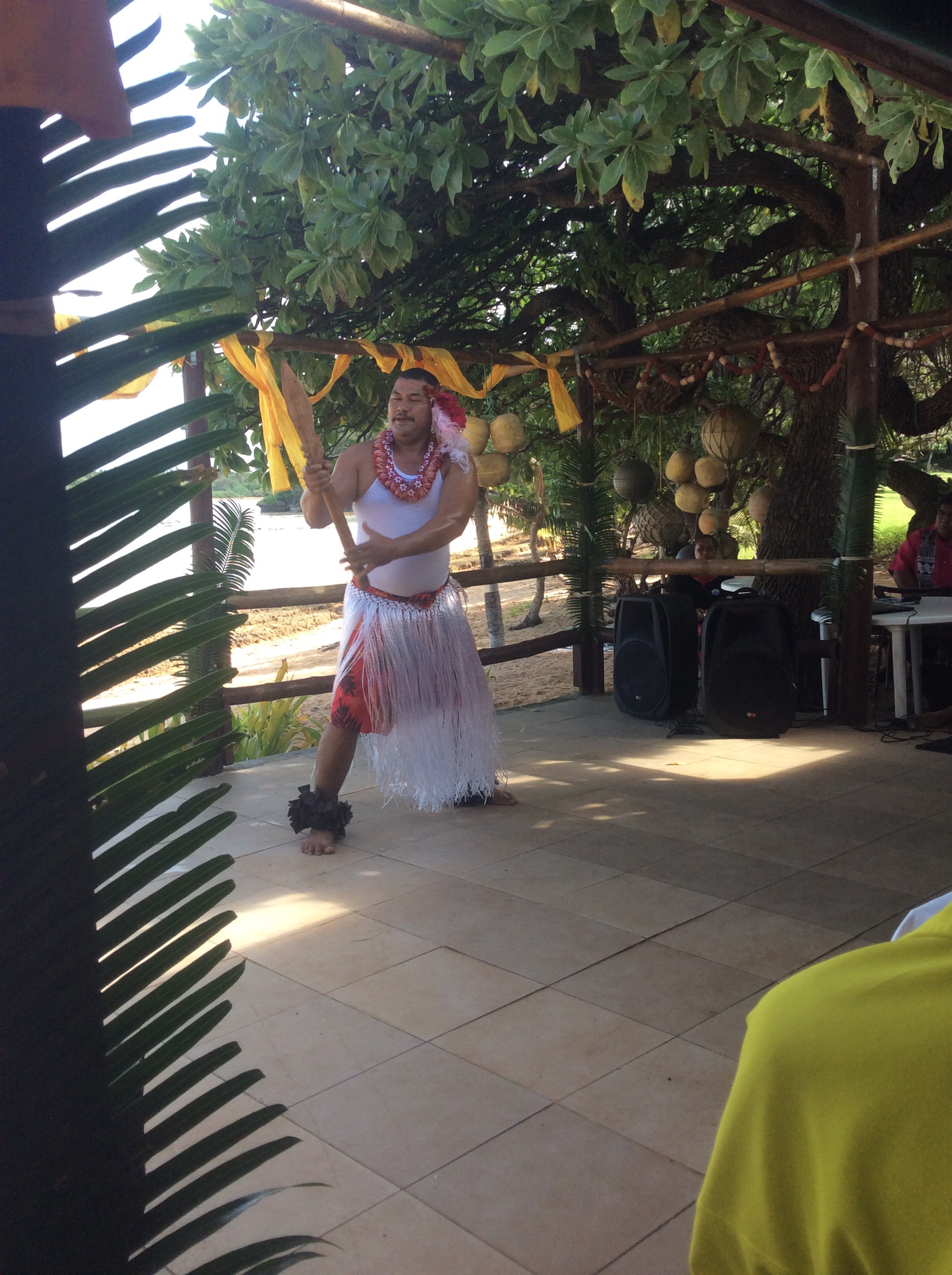
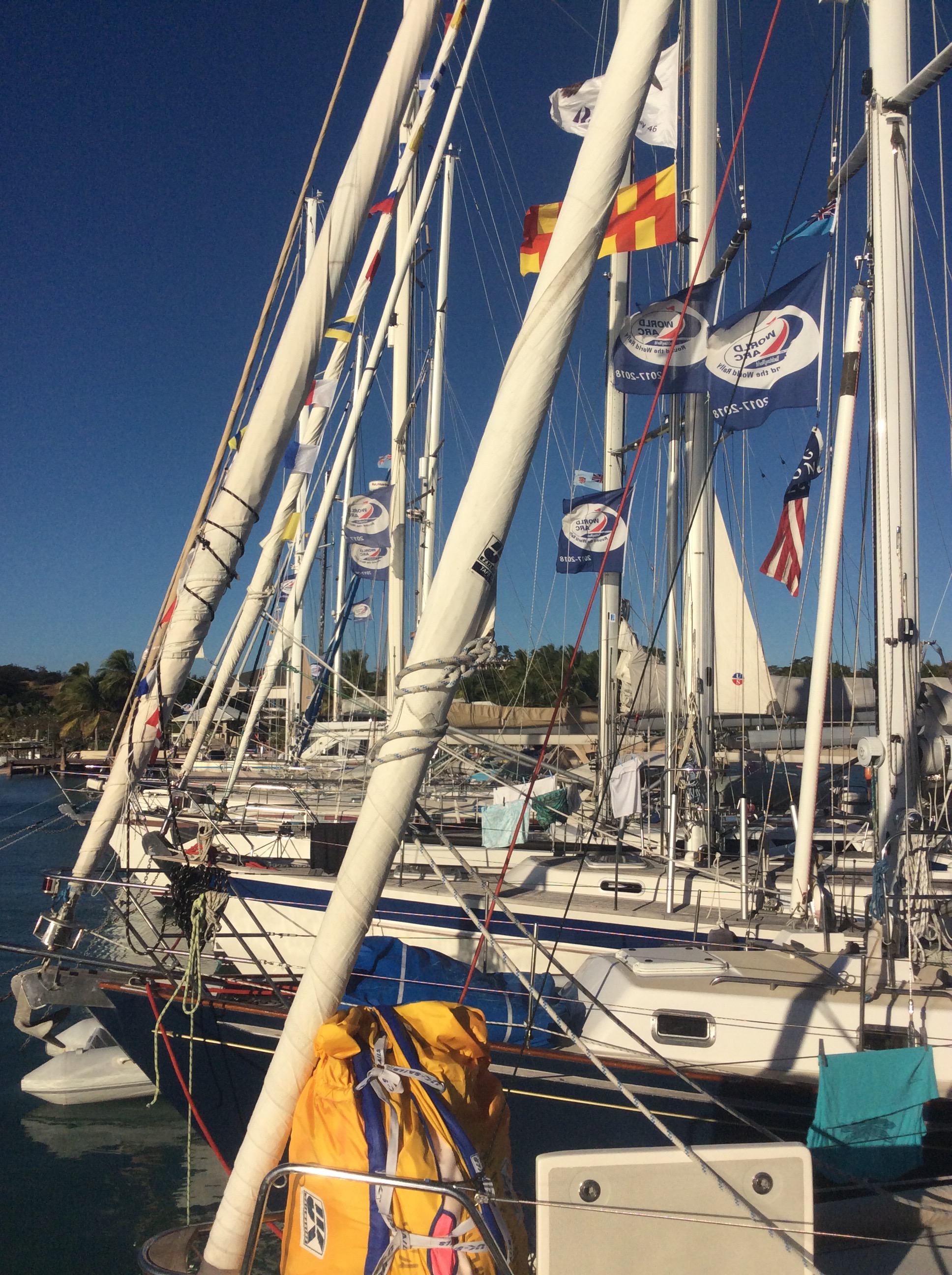
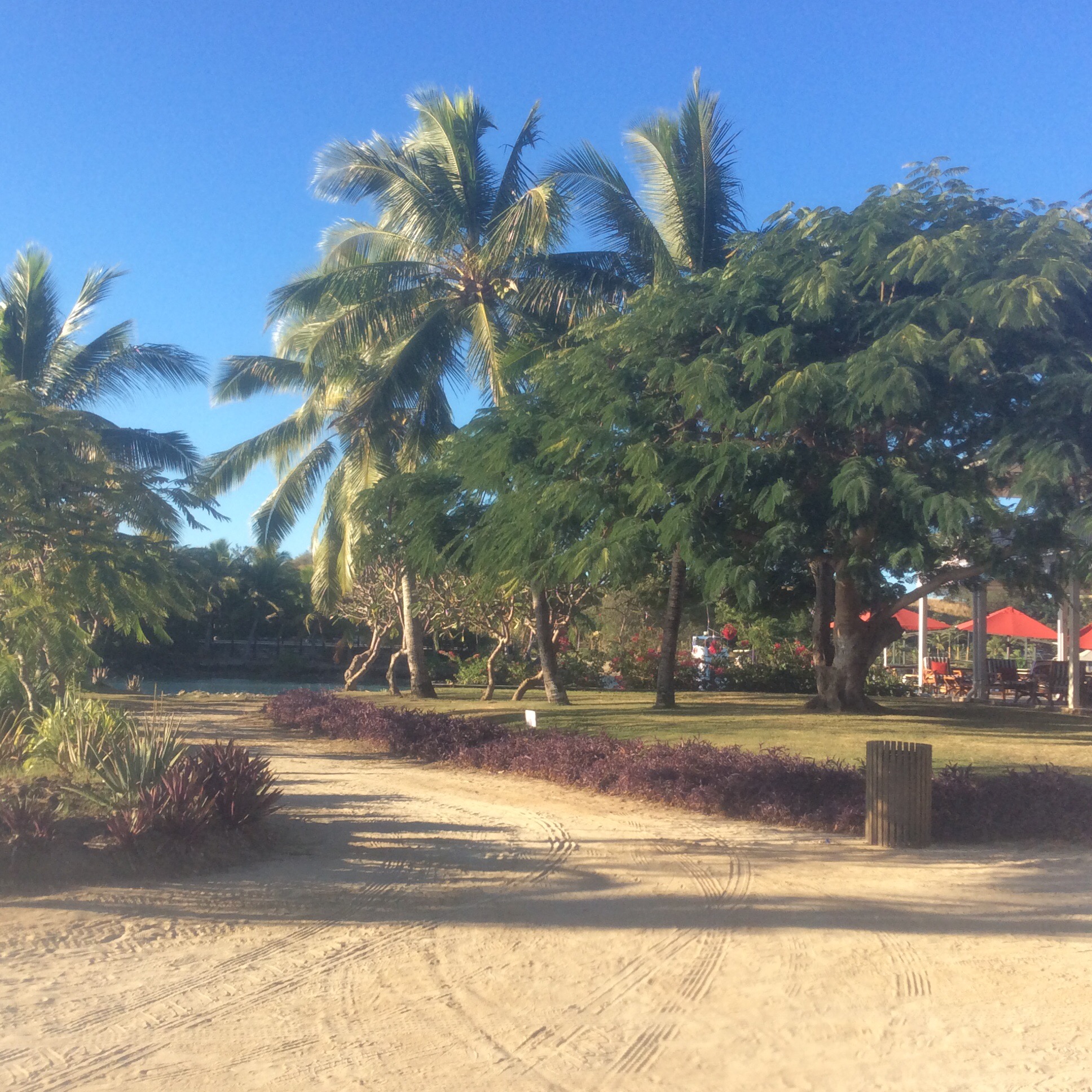
Cruising around Fiji, we visited the Yasawa islands, the Manta Ray pass (there weren’t any, but good snorkelling), the Blus Lagoon anchorage (where the Film with Brooke Shields was shot) and the beautiful island of Waya when we went ashore at the village and presented the chief (whose name was Tom) with our gift of Kava for the Sevusevu ceremony. The people are so happy and welcoming and have so little. After that we made our way south through the reefs to Malolo Lailai island and the Musket Cove Resort to meet up with the World ARC fleet and get ready for the next leg to Vanuatu. We are saying goodbye to a few boats here who are staying longer and maybe heading down to New Zealand for the cyclone season, but hopefully we will see them again next year as we are planning to spend time in Australia. Musket Cove is a lovely place to,relax, but we are all a bit busy getting the boats ready though at 450 nm it is not the longest leg.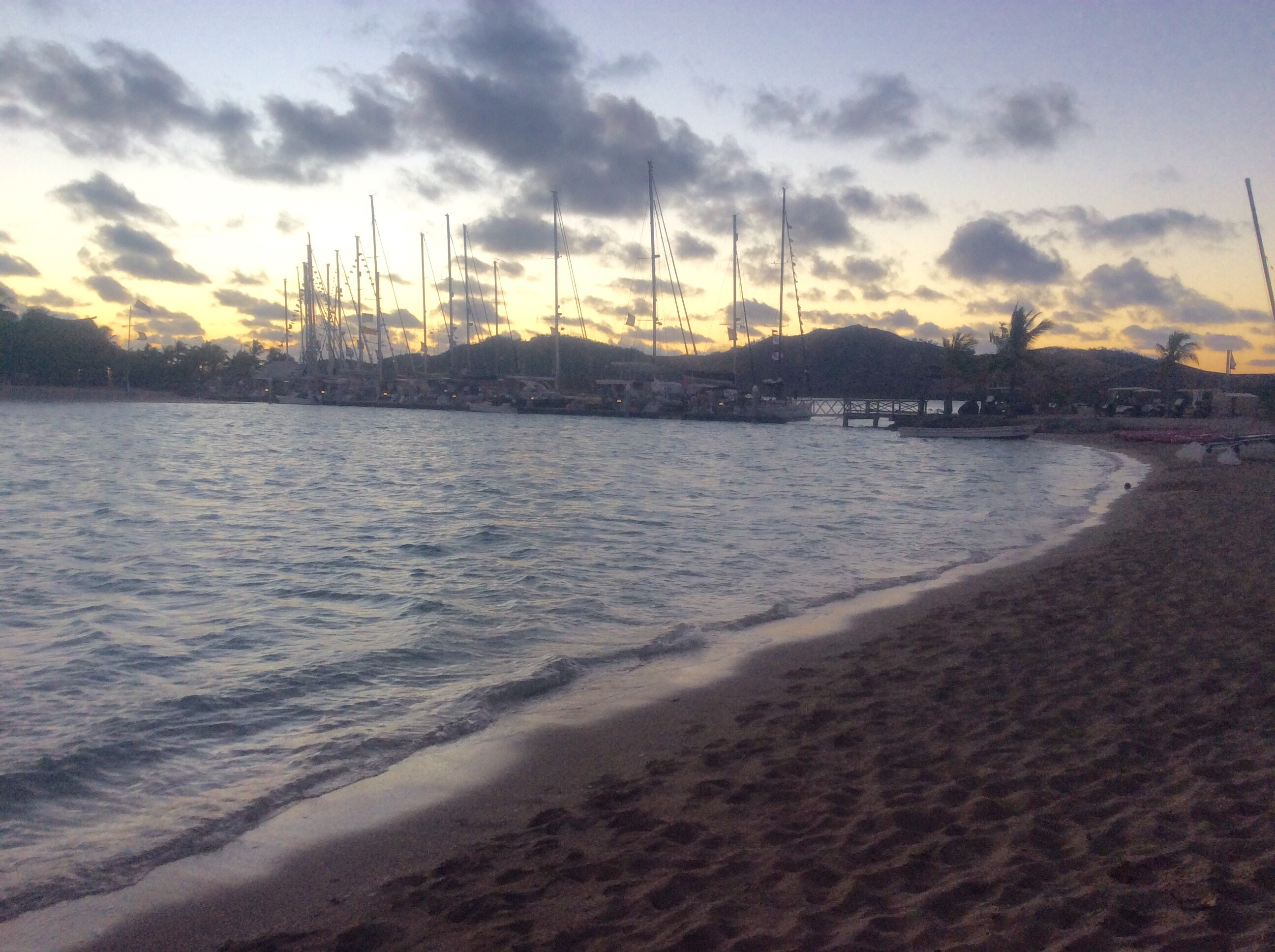
Fiji
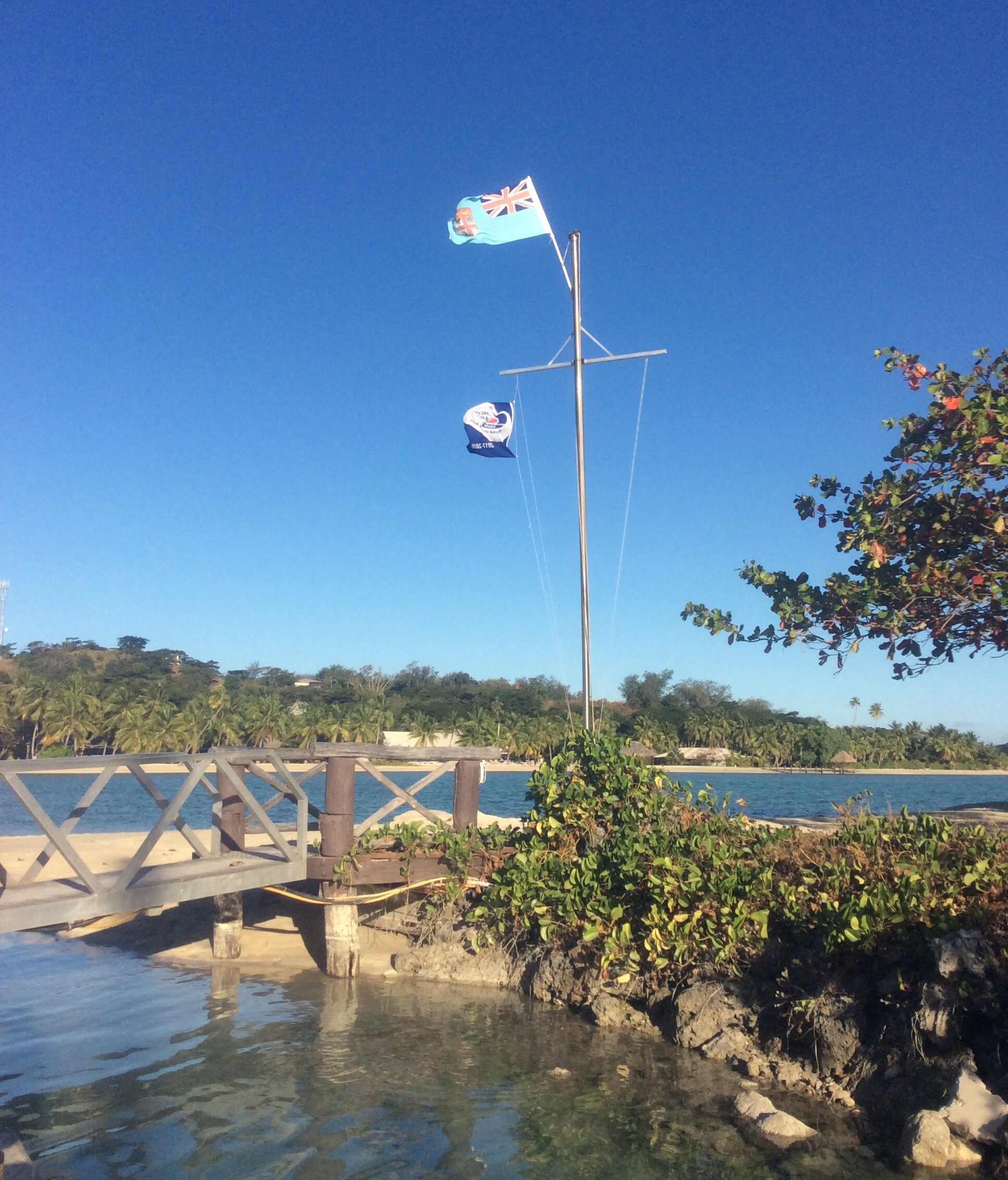
Fiji is much much bigger than we realised. 2 big islands and countless smaller ones, also many reefs. Navigation is complicated by the fact that neither paper nor electronic charts are guaranteed to be completely accurate (though the ones we have are not bad and you can supplement them using Google Earth), and many of the navigational marks (posts) were swept away by Cyclone Winston. A place of contrasts. There are remote and fairly primitive villages, some more or less luxury resorts, bustling towns. The people are a mix of ethnic Indians and ethnic Fijians and there have previously been racial tensions. It seems that most of the Indians are in the towns. The place names are confusing as many sound the same, so far for instance we have been at Lomolomo, Somosomo, Savusavu and are now at Volivoli, or one place may have several different spellings. Everywhere the people are happy, welcoming and friendly, you have to say”Bula” (hello) to everyone you meet. And it is beautiful. The land behind the bay where we are now anchored is reminiscent of the Cuillins – but many degrees warmer and drier.
We passed the landmark of 180 degrees longitude and did not in fact fall over the edge – though we did wonder as our electronic chart had a big white line and a gap at this point. So we are halfway round the world from Greenwich and had the winter solstice last week. It is much cooler here especially at night.
The World ARC fleet has separated into small groups, but we are maintaining communication with the daily SSB radio net and occasionally we have found many of us in the same bay for the night or at least in VHF range. We ended up spending a few days at the Paradise Taveuni resort, the staff were so friendly and helpful, then sailed on to the town of Savusavu on the 2nd biggest island of Vanua Levu. The crews of several WARC yachts helped Steve celebrate his birthday while we were there. We also managed to be invited guests for Savusavu Crime Prevention Week, and sit up on a stage and meet a government minister (or maybe she was the assistant minister), not sure how that happened- Steven and Andrew from Sumore and Laura Dawn had just got talking to someone earlier in the day.
We noticed that Scotland lost (rugby) to Fiji at Suva at the weekend.


Onwards to Fiji
Tonga to Fij was just 260 miles, but it ended up being a rather slow motor as there was hardly any wind. The day we left Tonga started with a torrential downpour, you couldn’t see the other ride of the harbour, but fortunately it stopped just as we were leaving in the afternoon. We slowed right down on the last night of the passage in order to arrive in daylight at the pass of the lagoon of the island of Vanua Balavu. More World ARC boats gathered as we waited for a rain squall to clear before going in following Aurora, with Skyelark and Zealand close behind. We had been warned that the charts of this area (indeed the whole of Fiji) may not be accurate – that’s both paper and electronic ones, so you need good light for navigation (you can also look on Google Earth). Once through the pass you still have to navigate across the big reef strewn lagoon to the anchorage at the island. There used to be some beacons but most of them washed away during Hurricane Winston, but we had been given some accurate waypoints and in fact the recent updated Navionics charts were reasonably accurate (not so some other brands). At the anchorage the officials (Customs and Biosecurity) went from boat to boat – 11 had arrived that day – doing clearances, then you were instructed to haul down the yellow flag and allowed to go ashore. The officials had been brought in especially by World ARC to clear us in – normally you would not be allowed to stop in this remote area.

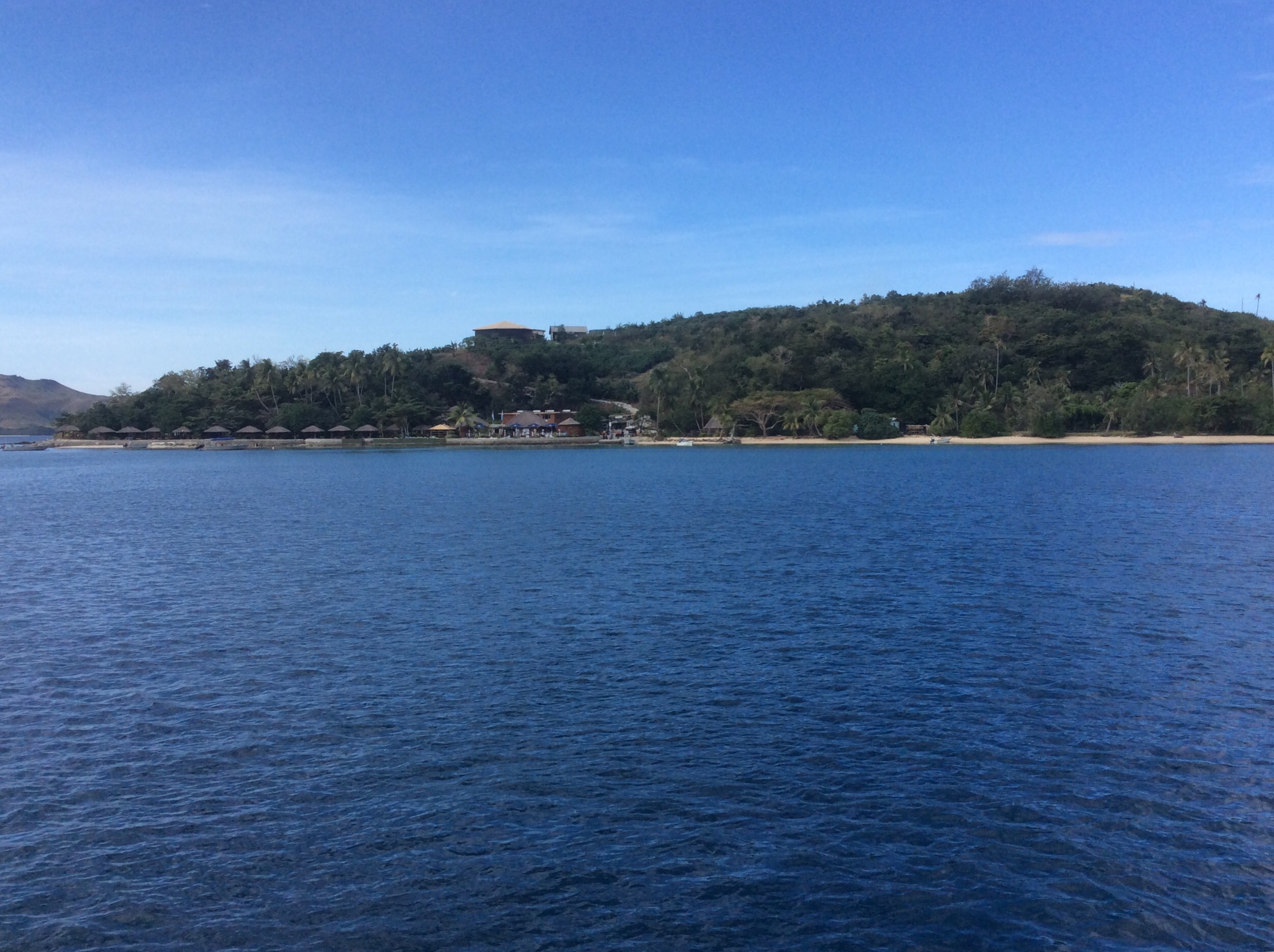
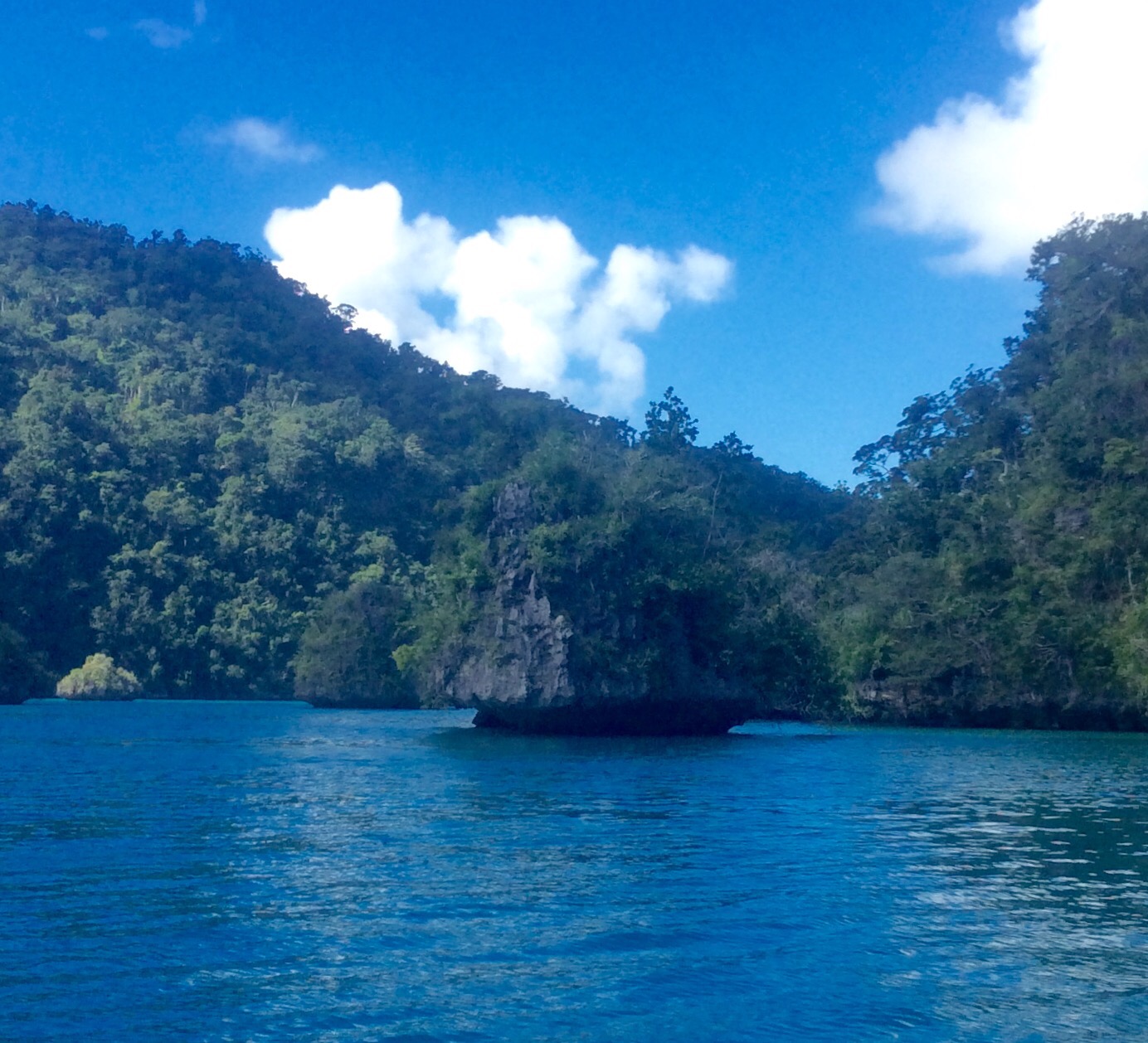
Next we navigated carefully to the village on the other side of the island (in convoy with 2 catamarans) where a Fijian feast was arranged for us with ceremonies, music and dancing, and Kava drinking. The people are so hospitable, helpful and friendly. Next day we were taken for a tour of the village and the school (our gifts for the School had been presented the night before) which is in temporary huts while it is being rebuilt after the hurricane . There are lots of lovely anchorages here, we spent a few days relaxing at the “Bay of islands”, lots of intricate channels between wooded limestone/ coralie islands of various sizes, undercut by the sea so they almost resemble mushrooms.


Tonga
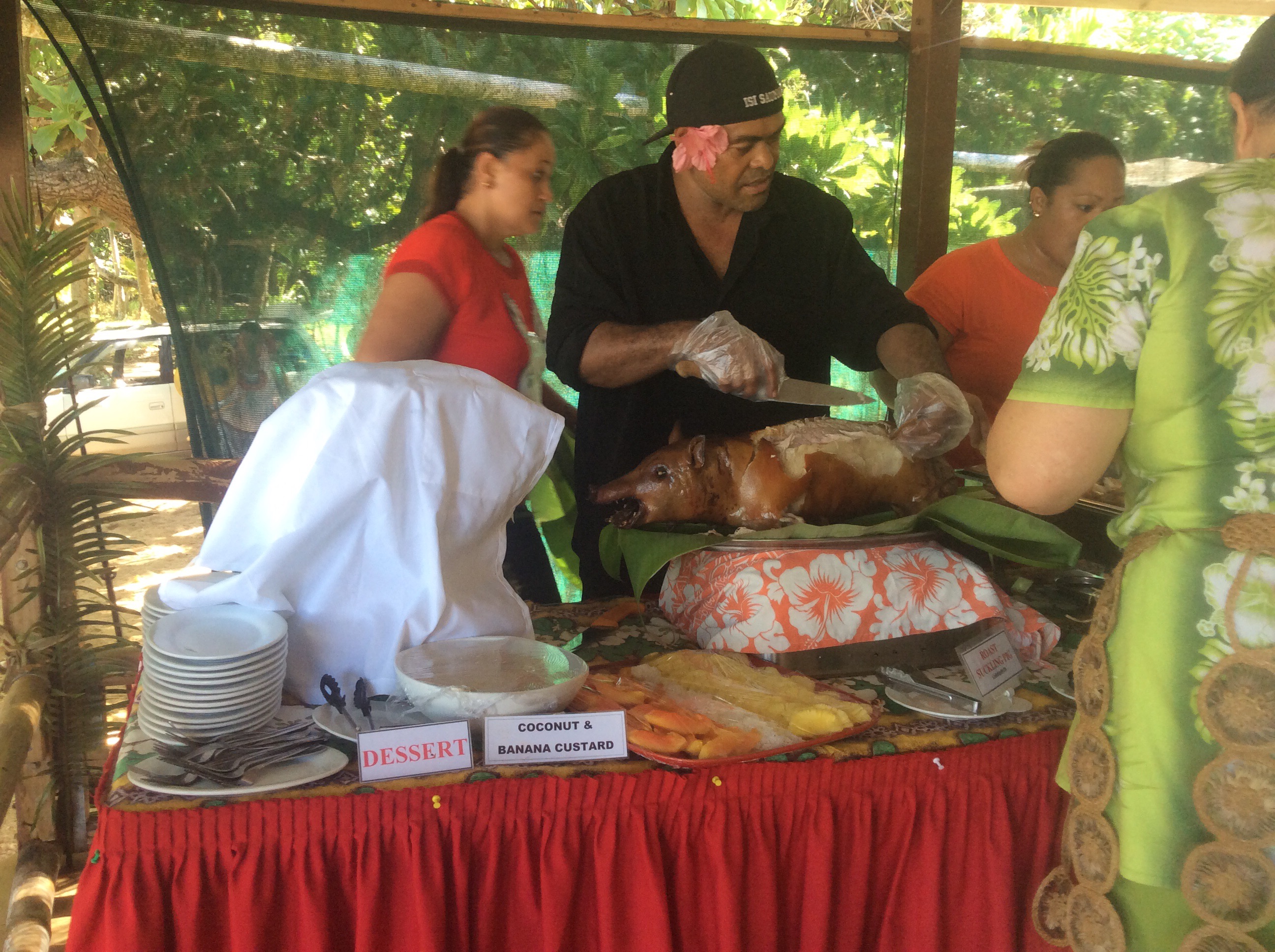
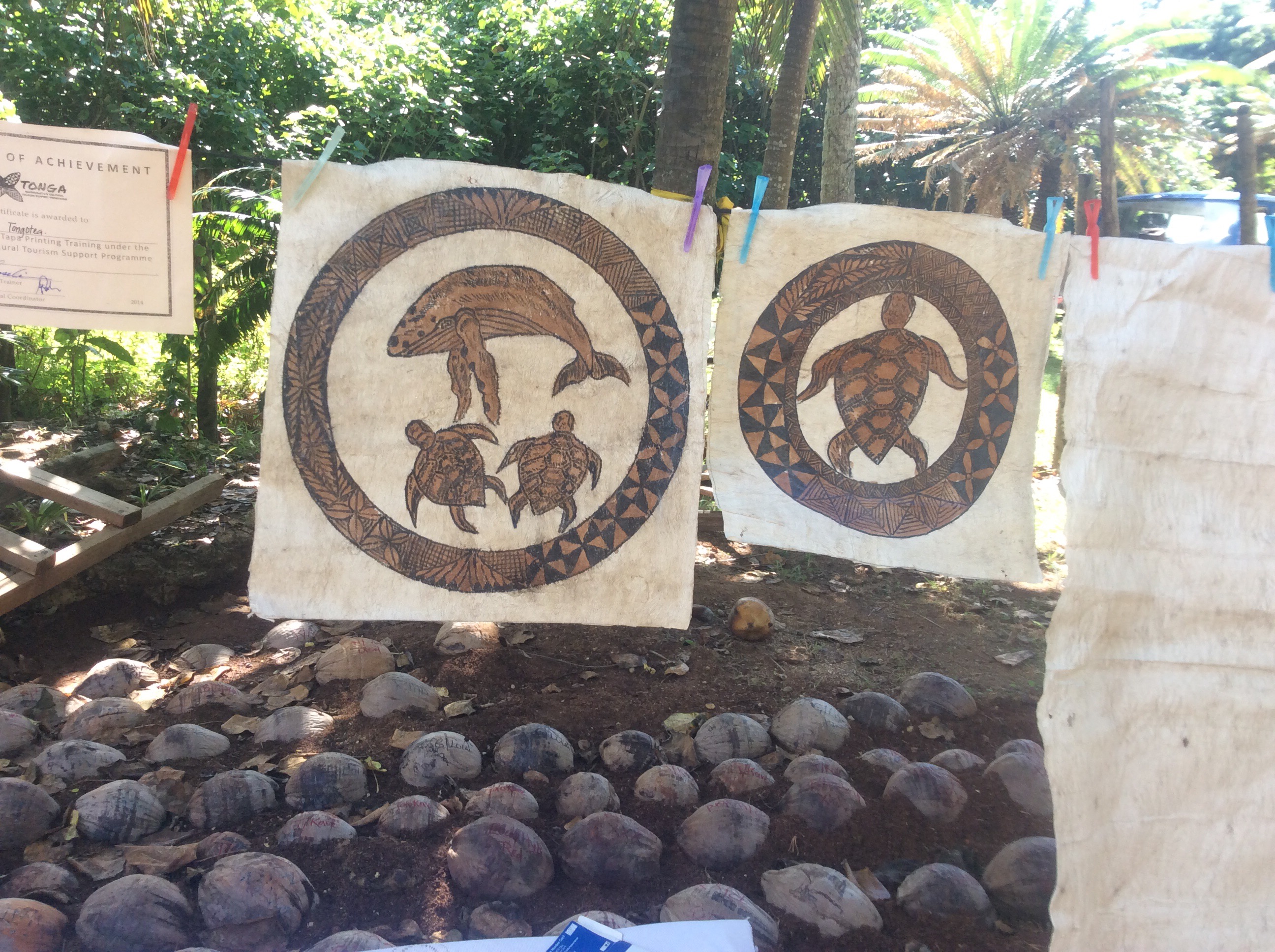
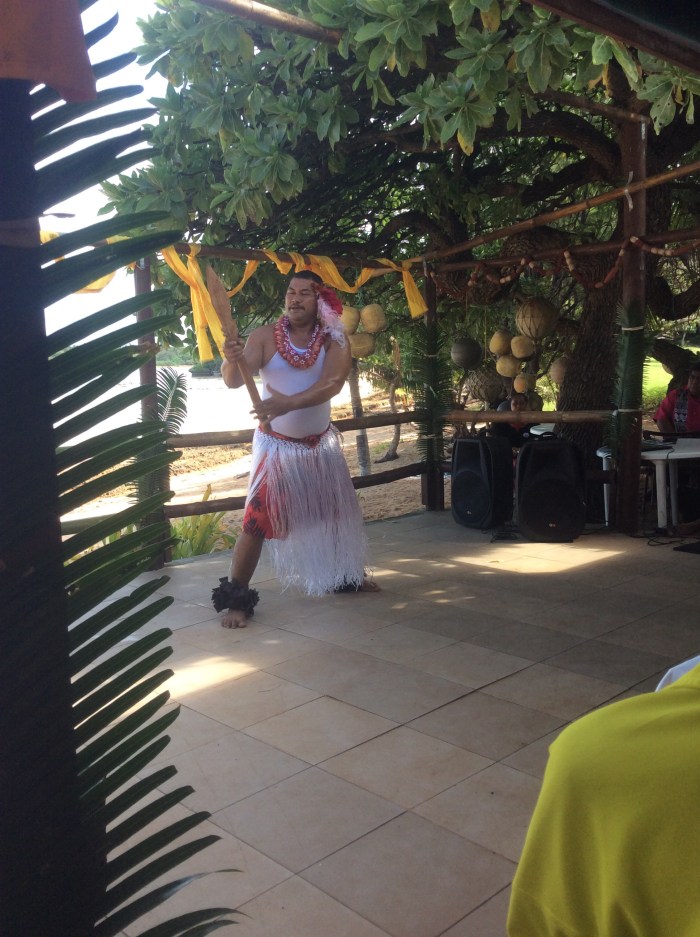
We are now in Tonga at 174 deg west so almost halfway round the world. As Tonga opted to be on the same date as New Zealand we have already crossed the international date line, so last week we had Wednesday up until afternoon tea time then it was Thursday for the rest of the day and we are now 12 hours ahead of UK. Someone in the fleet was proposing that a 180 deg celebration is just as, if not more, valid than a crossing the equator celebration so we will probably do that when we get there. Tonga is a very friendly, happy place, very traditional with men dressed in skirts (also the school uniforms), a few of the guys have embraced this look and pronounced it very cool (one even had the boat logo put on, but they have it on everything). Guess it is a tropical version of the kilt. Anyway skimpy clothes are frowned upon, you are supposed to be covered from shoulder to knee. We have been to a Tongan feast, complete with roast suckling pig and Tongan dancing. In fact there are pigs and piglets everywhere skinny ones with spots and stripes snouts but apparently they all belong to someone. There are some lovely handicrafts including the Psinted Tapa cloths. We also tried the local Kava (made from ground up root) but most were not impressed.
We are having a good time in the rally with the other 20 or so boats. We were 26 then some more joined, then a couple left. Anyway we are a pretty good community, if anyone has a problem, there are always folk ready to offer help – expertise, labour, spare parts, whatever. We actually got a prize for the last leg – for correctly guessing our arrival time in Tonga, not for sailing. We have done some great snorkelling here and explored a spectacular cave. At the moment it is actually raining, a tropical downpour due to a trough nearby, but still warm, I hope normal service will be resumed soon.
We are just about to set off for Fiji, at first to the remote Lau group. Later we go to the more populated islands. We were rushing round the market, great fruit and veg, and the Chinese supermarkets this morning to get supplies for the trip.
Niue
It is another 520 nm to Niue, another isolated island which is essentially a large block of coral limestone. It is the one of the world’s smallest independent nations and is in free association with New Zealand (and they supply a lot of funding). There is a population of say 1700 on Niue, but about 20,000 Niueans live in NZ. The trip was enlivened by a visit from a small pod of beautiful killer whales which came right next to the boat. Mostly we had good sailing during the day, but a lot of squalls at night meant crews did not get too much sleep. The Niue yacht club seems to exist just to look after visiting yachts, they provide moorings (it is difficult to anchor on the narrow rocky shelf), a sociable clubhouse, showers, even deliveries of fresh vegetables and an amazing amount of help and support. All the people are so friendly and helpful we were sorry to leave this lovely island after only 2 days, but we made the most of that time what with an island tour seeing amazing caves and snorkelling and a lovely function at the Matavai resort with local dancing and wonderful food, it was non-stop. We even managed to get duty free.
Suwarrow
Suwarrow is one of the Northern Cook Islands and is an isolated atoll hundreds of miles from anywhere. A few people were stranded there during the 2nd World war and at one point had to tie themselves to trees to survive a Cyclone. A New Zealander, Tom Neale, lived there alone for some years in the 1950s and 60s and wrote a book about it. The atoll is now a Nature Reserve and has a warden during the season (but not when we were there). You are only allowed to anchor at Anchorage island which is where Tom Neale’s house is (and where the caretakers stay). We arrived after 6 days from Bora Bora, navigating very carefully through the pass to anchor in the lagoon with rest of the fleet, trying to put the anchor in sand and not coral, which you could see in the clear water. We had a pilot whale right by the boat on one day, it came in really close. We had a great and very sociable time at this lovely peaceful place, swimming, snorkelling, walking on the reef, enjoying sundowners and potluck lunch on the beach. There were many black tipped reef sharks but they seemed pretty indifferent to humans. Most boats stayed an extra day as the forecast for Niue was not good. Leaving involved various shenanigans trying to unwind anchor chains from the coral heads, mostly it was a team effort with a snorkeller from another boat in the water to direct, we would not have got out without the help of Dan from Skyelark as our chain had managed to wedge itself between 2 rocks.


Society Isles Tahiti to Bora Bora
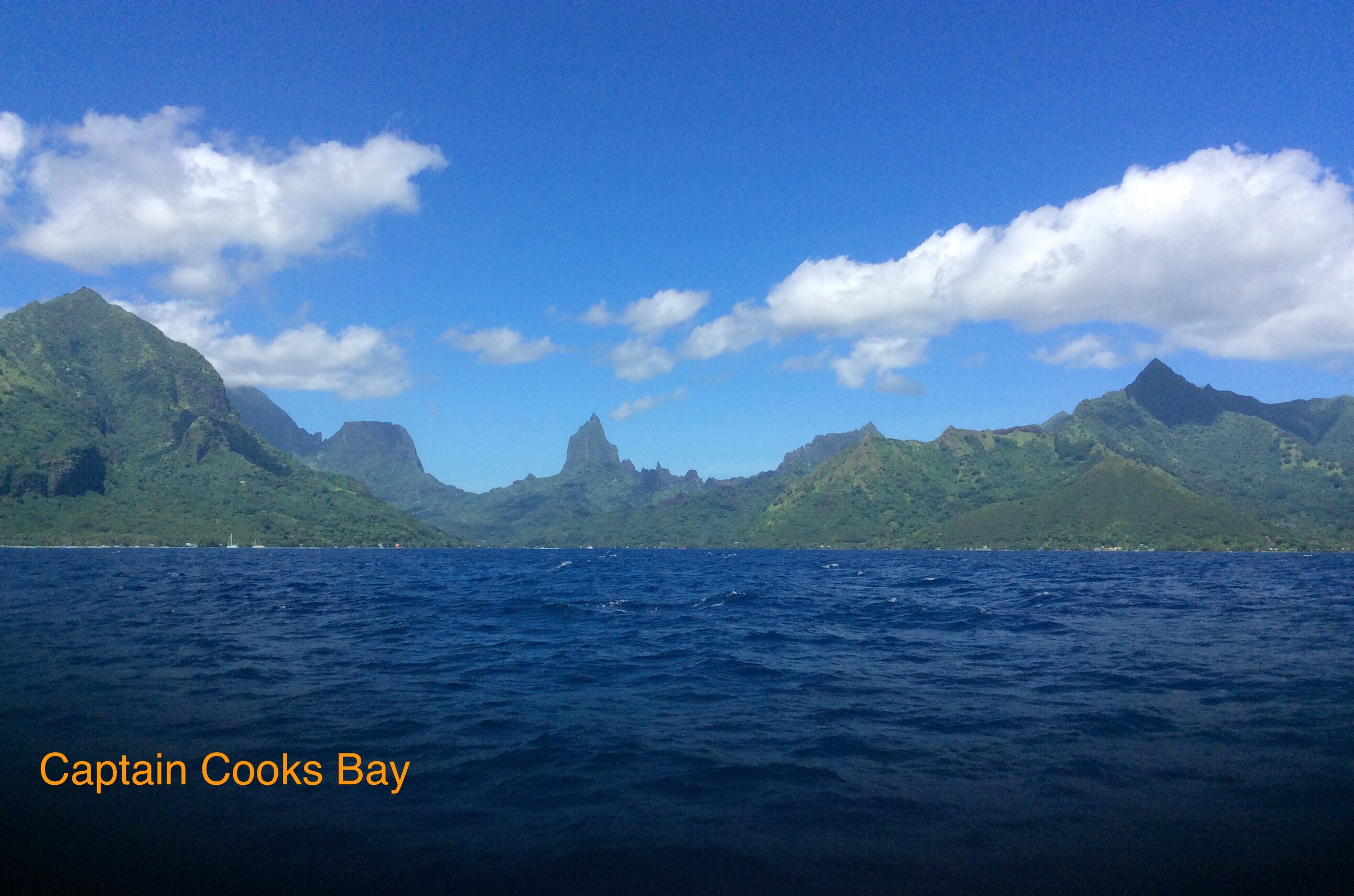
The Society Isles represent the 2nd stage of island development where a fringing coral reef has formed and the central conical high island has sunk a bit leaving an island surrounded by a lagoon. We arrived off Tahiti too early and drifted for several hours until it got light and we could make our way through the pass into the lagoon and to the Marina. Tahiti is quite a culture shock coming from the Tuamotus. Black roads, dual carriageway, traffic jams and street lights, also shops including a huge Carrefour near the Marina, and a laundrette! And of course you get French baguettes etc. We spent 10 days getting various jobs done and of course shopping, but we also managed an island tour. There was no official rally meet but we had a couple of good parties for Howard’s birthday and Jack, Ell and Steven’s leaving. Next stop Moorea where we anchored in scenic Cooks Bay, then Huahine when we anchored on the reef, then Raiatea and Tahaa, two islands within the same lagoon. We snorkelled in the Coral Gardens – a shallow pass that the tide swept you through with loads of corals and inquisitive fish. Unfortunately our hopes of finally getting the electronic Autopilot working properly again were dashed when the new hydraulic motor ordered by the engineer from Tahiti turned out to be completely the wrong thing – they never had the correct part. Then a lively sail across to Bora Bora, and it is still very bouncy on the mooring here. Bora Bora is quite busy with lots of hotels though in traditional style bungalows with thatch roofs built on stilts over the water – but all the same. I wanted to climb up the mountain but they say the trail is closed due to rain and insist that you have a guide, actually you do need a guide just to find the start of the trail as there are no maps. So instead we went on an island tour with a trip boat (yes we have a boat but the channel is too shallow at the S end for us). So we went snorkelling in coral gardens off the reef at the N end, then outside the lagoon off the reef where we swam with sharks (the guide fed them fish) mostly black tipped reef sharks with a lemon shark down deeper, then back inside the reef to swim in shallow water with stingrays and more sharks, then on round the island and a luxury lunch on a small motu, wound up with a demo of plaiting coconut palm leaves to make plates and knotting pareos. Our guide was clad just in his Pareo tied as a loin cloth – and his tattoos. Barbecue party tonight, dinghy race and last preparations on Saturday, then we head off on Sunday for Surrarow (Cook Islands), then Niue, then Tonga.
Tuamotus
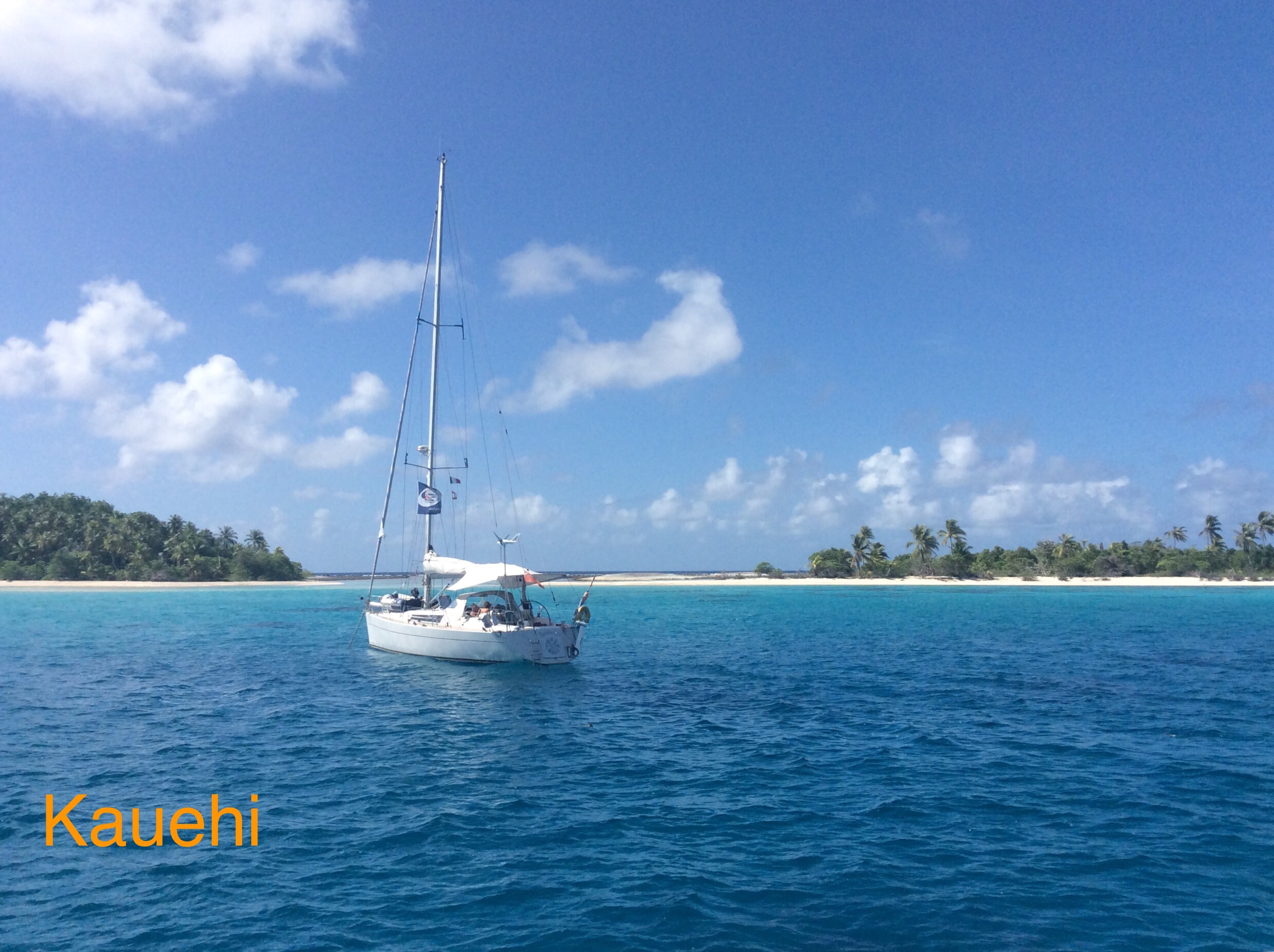
The Tuamotus represent the 3rd stage in island development where the central island has sunk leaving the lagoon enclosed by the coral reef with occasional Islands (motus) and palm trees. They are low lying and not visible from a great distance hence their previous name (pre GPS chart plotter days) of The Dangerous Archipelago. Of course it is still possible to make a mistake! We were aiming for Fakarava but realising that just about everyone else was heading there decided go to the smaller and slightly nearer island of Kauehi. The timing of entrance to the lagoon through the pass can be critical as there are strong tides and possibly overfalls etc ( just like narrow channels in Scotland). Also you need enough daylight to travel the 9 miles across the lagoon to the anchorage. Lexington was anchored at the village when we got there and we spent a nice evening with them, Skyelark and Taistealai arrived next day. The village was small, it had a shop, also an airstrip and everyone was very friendly. Apparently the oyster nursery is on Kauehi and they are taken out Fakarava to be matured (and pearls harvested). Lexington went on in the morning but the other three boats moved to the South end of the lagoon (letting Skyelark with the deepest keel lead the way) to find anchorage off deserted sandy motus with coconut palms and just behind the outer reef. Great snorkelling and lots of black tipped reef sharks, this was more what we expected in a Pacific island. All the boats stayed another day, and another … We later visited Fakarava (bigger and a much bigger village) and Toau but unfortunately the weather was not so good. Then off for the 240 mile sail to Tahiti.
The Marquesas
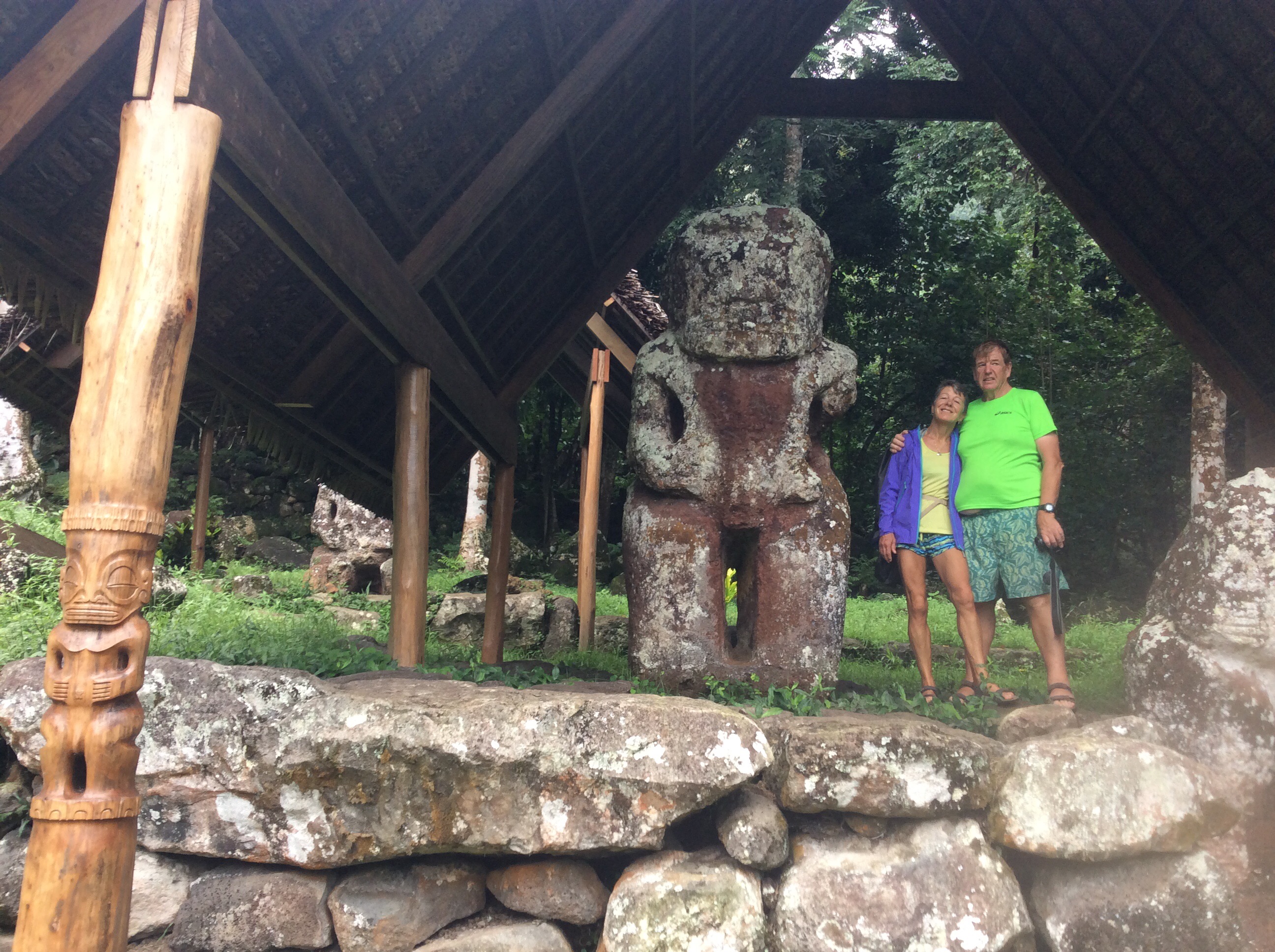
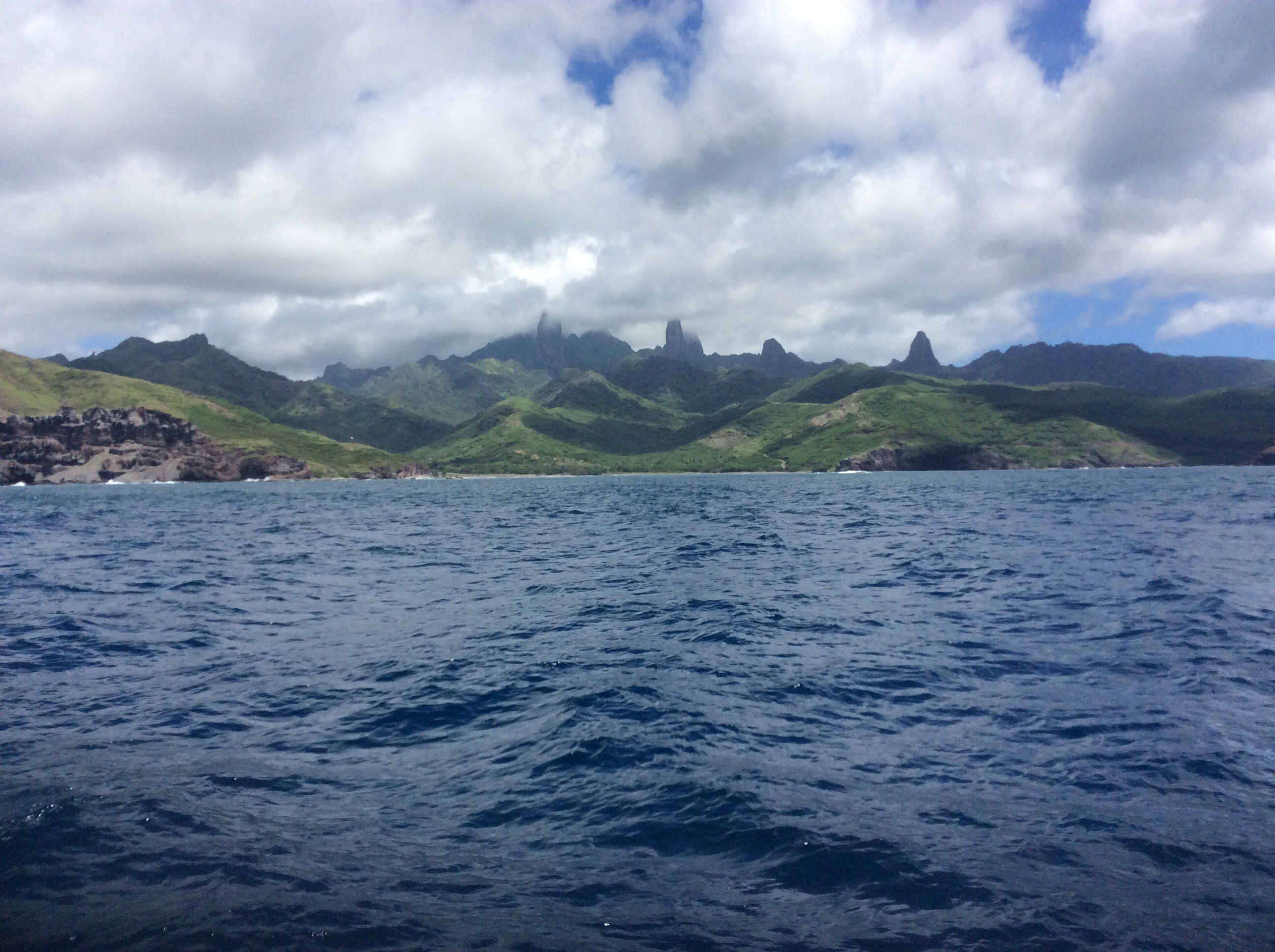
The Marquesas are high steep volcanic islands with no fringing coral reef, the first stage of island development. They are very green. After the crossing Hiva Oa seemed like a south sea oasis with gentle breezes waving palm trees – but it did rain. And you get French bread. We did an island tour by taxi looking at sites with ancient tiki statues and collecting fruits (bananas, mangoes and the huge local pampelmousse) along the way. Apart from the route to the airport the roads are little more than a track in many places. We looked at the Gaugin museum and did some shopping, a case of buying whatever was available when you saw it. Next a brief visit to the small island of Tahuata, then overnight to Taihoe Bay on Nuku Hiva for the world ARC get together where we were treated to a Sung Polynesian welcome by the village, displays of local foods, handicrafts and costumes, a traditional evening meal and dancing. We did a hike up to a waterfall and visited Controleur Bay and Taipivai, the location of Herman Melville’s novel Typee. A brief visit to the island of Ua Pou (scenic skyline) where we saw the traditional Polynesian vessel Hokulea come into port with much ceremony and celebration. The it was off to the Tuamotus, a sail of some 500 miles or so.
Pacific Crossing Galapagos to Marquesas Hiva Oa
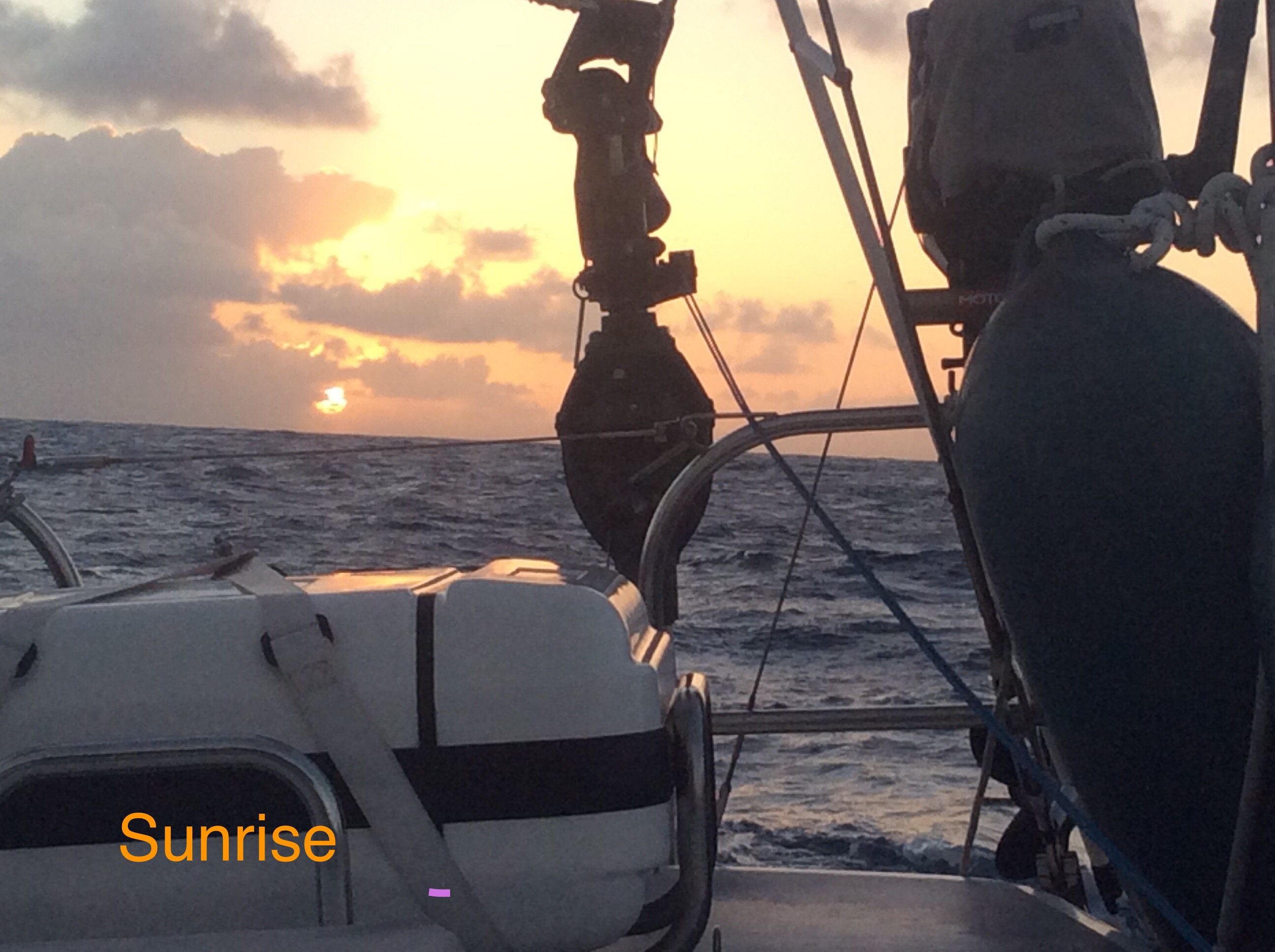
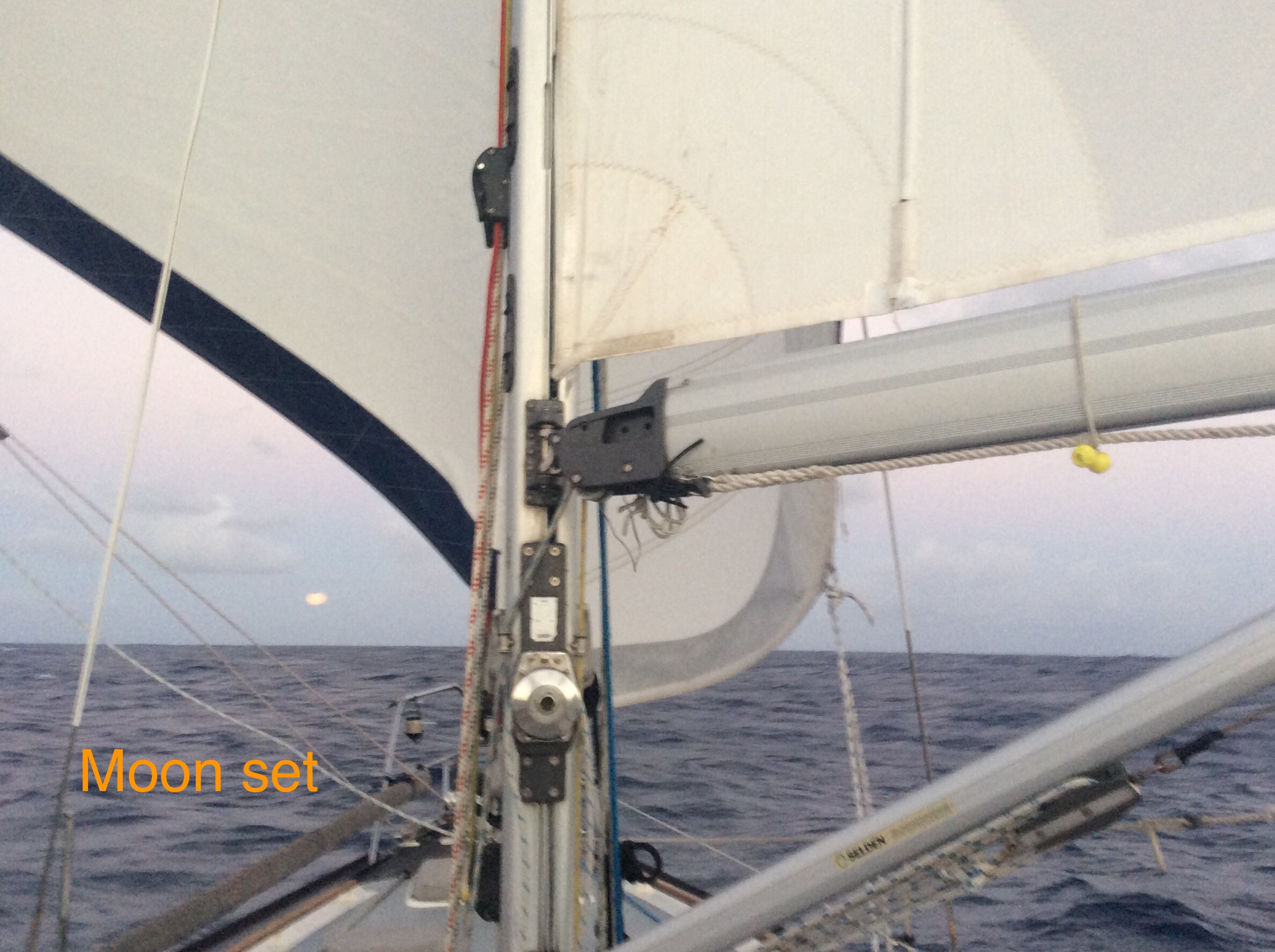
Pacific crossing Galapagos to Marquesas Hiva OaWe had been warned that there would not be much wind at first on leaving the Galagos, and to ship as much fuel as possible; our tank and cans were all full. As we crossed the line 12.00 on 1st March we had a nice breeze and everyone was sailing and happy. During the night the wind died and didn’t come back. For the next 3 days we chugged along slowly under engine (to conserve fuel) or tried to motorsail or sail in almost no wind – just to let the engine cool down and have a rest. I got a unique view of our boat when I went for a swim, the boat was drifting slowly on a glassy sea I could easily swim faster and look back at our home alone in the middle of the Pacific Ocean. The chat on the SSB net was all about wind – or lack of it. The weather gurus said there would be wind at 8 deg S. Eventually we realised that we would get there faster (and might have enough fuel) if we headed due S rather than SW. That night we reached 7 deg S, and the wind gradually came up, we were sailing, and although strength and direction varied a bit it never went away again. I got another view of our boat alone on the ocean – this time from the top of the mast. The cruising chute halyard had jammed, the sail was in a fankle all round the rolled foresail, there was no choice but for Steve to hoist me up (meanwhile the boat is sailing under Autopilot mainsail only) and cut it down. Luckily the sail slithered down the forestay onto the foredeck rather than into the water. It took a little while to unwind it all, then we could hurry and set the poled out Yankee before it got dark – and the sails stayed like this for the next week or more. And so the days went on. Sometimes you could view Moon set at the front of the boat just as the sun rose behind. Towards the end of the passage we got a lot of squalls which was a bit frustrating knowing the faster boats were already in port. We finally arrived after 23 days and 8 hours or so and anchored outside the port at Hiva Oa. We got a great welcome from some of the World ARC boats also moored outside. The longest leg of our trip (nearly 3,000 miles) was done.
 Timshel81